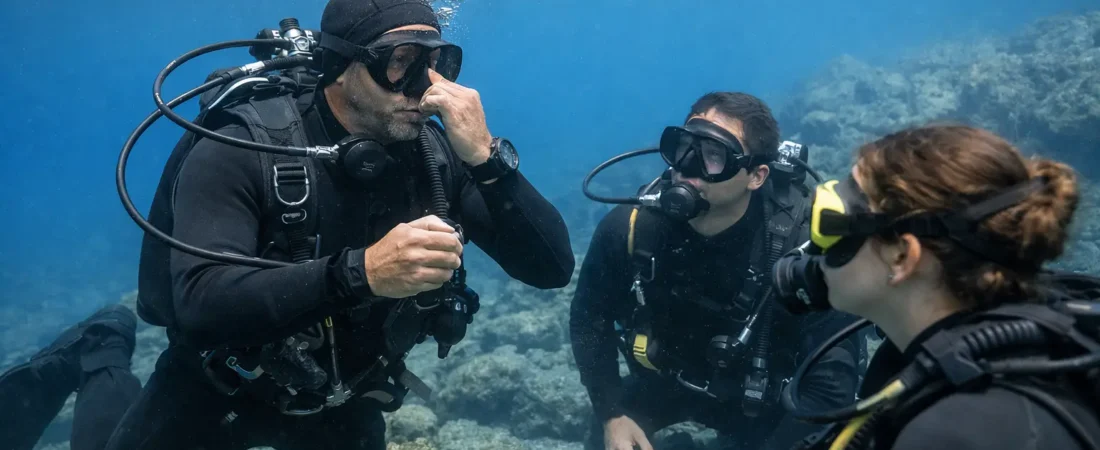
The moment before your first breath underwater can feel surprisingly big. You may be excited, curious and slightly unsure of what your body will do when you place the regulator in your mouth. This is where great scuba instructors make all the difference: they do not rush the moment. They explain, demonstrate, wait, and help you find a rhythm that feels natural.
For a first-time diver, an instructor is far more than the person leading the activity. They are the calm presence that turns an unfamiliar environment into a safe, memorable experience. For certified divers, they are also the local guide who helps reveal Tenerife’s volcanic underwater landscapes with thoughtful planning and genuine care.
What scuba instructors really do
A certified instructor has the training to teach, supervise and assess divers. Yet the most valuable parts of their role are often the least technical. They listen carefully, notice when someone needs a little more time, and adapt the experience without making the guest feel like they are holding anyone back.
Before entering the water, a good instructor creates clarity. You should understand how the equipment works, how to communicate underwater, what the plan is, and what to do if you feel uncomfortable. The explanation should be simple rather than overwhelming. You do not need to memorise a textbook to enjoy a first dive. You need to feel prepared for the few things that matter.
In the water, the instructor stays attentive to your breathing, comfort and body language. A small adjustment to a mask, a pause on the surface or a quieter pace during descent can change the entire experience. This individual attention is especially valuable for beginners, nervous swimmers and anyone returning to diving after a long break.
Safety begins long before the sea
Safe diving is not just about reacting well if something unexpected happens. It starts with sensible preparation. Your instructor should ask about your health, diving history and confidence in the water, then select an appropriate plan for the day.
Conditions matter too. Sea state, visibility and the chosen entry point all influence how a dive will feel. Tenerife offers remarkable sites shaped by volcanic geology, but the right site is always the one that suits the diver and the conditions on that particular day. An experienced local instructor does not treat every outing as identical.
Equipment preparation is part of that reassurance. When kit is properly fitted and checked before the water, you can focus on the experience rather than wondering whether something feels right. For a private introduction to scuba diving, having equipment included and prepared for you removes a great deal of unnecessary stress.
Why personal attention changes a first dive
Many people worry that they will panic, struggle to equalise their ears, or simply not enjoy breathing underwater. These concerns are common, and none needs to define your experience. The most reassuring scuba instructors give you permission to go slowly.
A first dive should not feel like a test. There is time to practise breathing on the surface, clear water from a mask, and become comfortable before moving further. If you need another explanation, you receive one. If you need a moment, you take it. Progress is built through calm repetition, not pressure.
This approach is also more enjoyable. Once your attention is no longer fixed on the equipment, you begin to notice the details around you: light moving across volcanic rock, fish passing through the blue, and the peaceful sensation of floating weightlessly. That shift from concentration to wonder is one of the reasons people remember their first dive so clearly.
For couples, families or friends travelling together, private guidance can be particularly helpful. People rarely arrive with exactly the same confidence level. One person may be ready immediately while another needs more reassurance. A personalised experience allows each guest to feel supported at their own pace.
The value of local knowledge in Tenerife
Certified divers often look for more than a competent guide. They want someone who knows how to make the most of the destination without overcomplicating the day. In Tenerife, this means understanding the character of different coastal sites, the conditions that suit them, and the details that make a route enjoyable.
The island’s volcanic coastline can offer striking formations, textured rock and a distinctive underwater atmosphere. A local instructor helps you explore it with context, pointing out features you might otherwise pass without noticing. They also keep the practical side easy: where to meet, what to bring, how the timing will work, and what level of dive is suitable for you.
For guests staying around Los Cristianos, Costa Adeje or Playa de las Américas, a well-organised dive should feel like part of a relaxed holiday rather than a complicated expedition. When transport is arranged where appropriate, equipment is ready, and the plan is clearly communicated, you can arrive focused on the sea rather than logistics.
A guide should never make assumptions
Certification is valuable, but it does not tell the whole story. A diver with a recent qualification may have fewer real-water dives than someone certified years ago. Equally, an experienced diver may be returning after time away and prefer a gentler first outing.
The best instructors ask the right questions before suggesting a site or route. They want to know what you have enjoyed before, when you last dived, how comfortable you feel, and what sort of experience you hope for. There is no single ‘best’ Tenerife dive for everyone. There is only the best choice for you on the day.
How to choose an instructor you can trust
Look first for recognised certification and clear communication. A professional instructor should be happy to explain what is included, how the activity is structured, and what happens if conditions are not suitable. You should never feel embarrassed to ask about safety, equipment or your own confidence.
Then pay attention to the tone of the conversation. Does the person answer your questions thoughtfully? Do they ask about you, rather than simply describing the activity? Are the instructions clear and calm? These small signals often reveal the quality of care you can expect in the water.
It is also worth considering what would make the experience easier for you. For some people, that is a private setting and flexible pace. For others, it is having all equipment included, receiving underwater photographs, or knowing that the practical arrangements have been considered in advance. Premium service is not about unnecessary extras. It is about removing friction so the experience feels personal and well looked after.
At Lov’Ocean, that is the intention behind every private beginner experience, course and guided dive: to combine professional standards with a warm, unhurried style of care. The goal is not to impress you with jargon. It is to help you feel ready, supported and present for what is happening beneath the surface.
Questions worth asking before you book
You do not need a long checklist, but a few questions can help you make a confident decision. Ask whether the experience is suitable for complete beginners or for your current certification level. Check what equipment is provided, how much time is allowed for briefing and practice, and whether photos are included.
If you have a medical condition, are pregnant, take regular medication, or have recently had an illness affecting your ears, chest or sinuses, mention it before booking. Diving professionals will advise carefully and may ask you to seek medical clearance. This is not an obstacle or a judgement. It is simply part of looking after you properly.
Finally, be honest about nerves. You do not have to be fearless to try scuba diving. In fact, telling your instructor that you feel anxious gives them the chance to support you in the most useful way.
A memorable dive is rarely defined by how deep you went or how much you managed to fit into one day. It is the feeling of taking that first calm breath underwater, knowing someone capable is close by, and realising that the sea can feel more welcoming than you imagined.