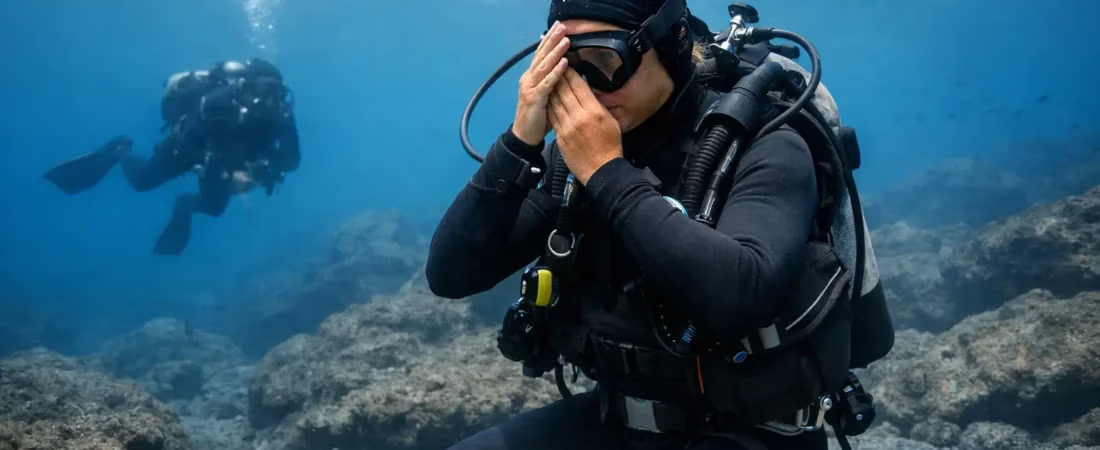
A lot of people feel completely confident about booking a dive – right up until the wetsuit is on and the sea suddenly looks much bigger than it did in the photos. That moment is exactly why people search for how to overcome diving nerves. The reassuring part is simple: nerves before a dive are normal, common and very manageable with the right support.
Feeling nervous does not mean diving is not for you. It usually means your mind is reacting to something new, unfamiliar and important. For some people, it is the thought of breathing underwater. For others, it is a fear of not being in control, getting something wrong, or feeling pressure to keep up. None of that is unusual, and none of it makes you a difficult guest or a poor future diver.
Why diving nerves happen in the first place
Most diving nerves come from anticipation rather than from the dive itself. Your imagination fills in gaps before your experience does. If you have never worn scuba equipment, never breathed through a regulator, or never entered the sea with an instructor, your brain tends to treat all of it as a possible threat.
There is also a difference between healthy nerves and real panic. Healthy nerves often feel like a racing heart, butterflies, or a few repetitive worries before the dive starts. Panic tends to feel sharper and more overwhelming. The distinction matters because mild nerves often settle very quickly once you are briefed properly, moving at a calm pace, and given time to adjust.
This is why the environment around you matters so much. Clear explanations, a patient instructor and a pace that suits you can make the difference between an anxious start and a genuinely enjoyable first underwater experience.
How to overcome diving nerves before your session
The best way to reduce nerves is not to ignore them. It is to prepare for them in a realistic, calm way. Good preparation does not mean overthinking every detail. It means removing unnecessary uncertainty.
Start by being honest about what worries you. If your concern is breathing, say so. If you are uneasy about being in open water, mention it. If your worry is simply, « What if I panic? », that is worth saying too. A good instructor would always prefer to know what is on your mind rather than guess.
Sleep and hydration help more than people expect. Turning up tired, dehydrated or rushed can make normal nerves feel much bigger. A light meal beforehand is usually better than arriving hungry or overly full. Small physical stresses can amplify mental ones.
It also helps to avoid building the experience up into a personal test. Your first dive is not a performance. You do not need to prove bravery, confidence or natural talent. You only need to arrive ready to listen, breathe slowly and take it step by step.
The first five minutes matter most
If you are wondering how to overcome diving nerves in a practical sense, focus on the beginning rather than the whole dive. Most anxiety peaks before entry or in the first few minutes. Once your breathing settles and you realise you can pause, communicate and stay close to your instructor, the intensity usually drops.
This is where pace matters. You should never feel rushed from briefing to equipment to water entry. Calm diving starts on land. When instructions are clear and the atmosphere is unhurried, your body has time to catch up with your mind.
Many nervous divers feel immediate relief the moment they discover they do not have to do everything at once. You can stand, breathe, adjust, look around, and only continue when you feel ready. That sense of control is often what changes the experience.
Breathing is the anchor
The most useful skill for nervous divers is not technical. It is simply slow, steady breathing. Anxiety encourages short, shallow breaths. Underwater, that can make you feel more tense than you need to.
Before the dive, practise inhaling gently and exhaling a little longer than you inhale. Nothing dramatic. Just calm, even breathing. Once in the water, keep your attention on the rhythm rather than on every possible sensation. The regulator can feel unusual at first, but unusual does not mean unsafe. Within a short time, most people find it becomes surprisingly natural.
If you feel your nerves rising, do less, not more. Stop. Breathe. Look at your instructor. Reconnect with the basics. That short pause is often enough.
Familiarity reduces fear
A large part of nervousness comes from novelty. The more familiar things feel, the calmer you become. Seeing the equipment before using it, understanding how to communicate underwater, and knowing what the first few steps will look like all reduce mental load.
This is why good briefings matter. They are not a formality. They create predictability. When you know what happens first, what happens next, and what your instructor will do if you need help, your body stops treating every sensation as a surprise.
What to do if you feel nervous in the water
First, remember that feeling nervous in the water does not mean the dive is going wrong. It simply means you need a moment. In many cases, that moment is enough to reset everything.
Use the simplest response possible. Signal your instructor, pause where you are, and return to slow breathing. You may need to stay shallow for a little longer. You may want to repeat one step before moving on. You may decide you are ready after thirty seconds. It depends on the person.
The key is that you should feel supported, not hurried. Confidence underwater is not built by pretending to be relaxed. It is built by experiencing calm, manageable moments and realising you can handle them.
For some people, nerves disappear quickly once they start looking at the underwater landscape. In Tenerife, volcanic rock formations and clear light can shift attention away from internal stress and towards genuine curiosity. For others, confidence grows more gradually. Both are normal.
How instructors help you overcome diving nerves
A reassuring instructor does much more than explain safety procedures. They set the emotional tone of the dive. The best support feels calm, attentive and personalised. It never makes you feel awkward for asking questions or needing extra time.
This is especially important for beginners. Private guidance or a very personalised approach gives you space to settle into the experience without feeling observed or pressured. For many adults, that alone makes a significant difference. People often assume nerves are something they should get over privately, but in reality they are much easier to manage when the experience is built around comfort and trust.
At Lov’Ocean, this approach matters because diving well is not about rushing through a checklist. It is about creating the conditions in which you can actually enjoy the water. When the experience is calm, clear and adapted to you, nerves have far less room to grow.
Small mindset shifts that genuinely help
Trying to « be fearless » is rarely useful. A better goal is to be calm enough to continue. That is a more realistic standard, and it works.
It also helps to stop treating nervousness as a sign. Nerves are not a warning that something bad will happen. More often, they are a sign that you care about what you are doing. That can coexist perfectly well with a safe, enjoyable dive.
Another helpful shift is to think in stages. You do not need to feel ready for the entire session all at once. You only need to feel ready for the next step – the briefing, the equipment check, the first breaths, the water entry. Confidence often arrives after the action begins, not before.
When it is worth postponing a dive
There are times when « push through it » is the wrong advice. If your anxiety feels extreme, if you are unwell, or if something personal has left you physically or emotionally drained, postponing may be the wiser choice. There is no benefit in forcing an experience on a day when your system is already overloaded.
A good diving experience should feel supported from start to finish. Sometimes the most confident decision is to choose a better moment rather than a harder one.
That said, many people who nearly cancel because of nerves end up finishing their dive with a very different expression on their face than the one they had at the start. Not because they forced themselves through fear, but because they were guided through it with patience.
If diving is something you want to experience, nerves do not have to be the reason you miss it. With the right pace, the right preparation and the right person beside you, calm usually arrives sooner than you think.