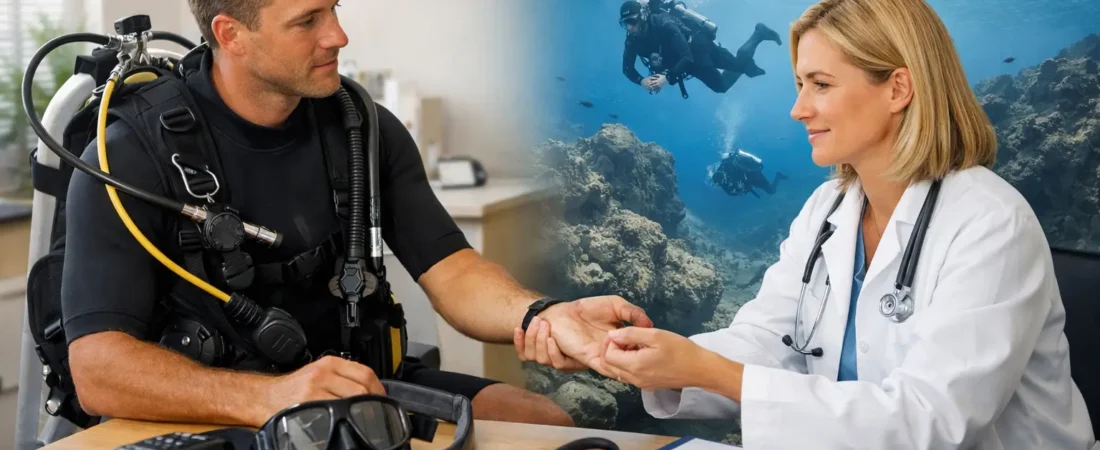
A calm first breath underwater starts well before you reach the sea. Diving medical requirements are not there to make a holiday activity feel complicated. They help your instructor understand whether scuba diving is suitable for you on the day, and whether a little extra medical advice is needed first.
For most healthy adults, the process is straightforward: you complete an honest health questionnaire, discuss anything relevant with your instructor, and enjoy the experience at a pace that feels comfortable. For some people, a doctor’s approval may be required before entering the water. That is a sensible precaution, not a judgement on your fitness or ability.
What are diving medical requirements?
Before a beginner experience, course or guided dive, you will normally be asked to complete a medical declaration. It covers conditions that could become more significant underwater, where pressure changes, breathing equipment and being away from immediate land-based care all matter.
The form is designed to identify whether you can dive without further assessment or whether you should speak to a doctor first. It is not a test to catch people out. Clear, accurate answers allow your instructor to plan responsibly and give you the relaxed attention you deserve.
Requirements vary slightly depending on the activity, your answers and the training standards being followed. A private introductory dive may be accessible to many people who have never tried scuba before, but the safety checks remain just as meaningful. Certified divers are also expected to declare any relevant change in health since their last dive.
When you may need medical approval
A “yes” on a health questionnaire does not automatically mean you cannot dive. It usually means that a doctor, ideally one familiar with diving medicine, should confirm that scuba diving is appropriate for you. The decision depends on the condition itself, how well it is controlled, your treatment and the type of diving planned.
Extra medical advice is commonly requested for current or past issues involving the heart, lungs, ears, sinuses, brain or nervous system. This can include asthma, chest surgery, heart conditions, recurrent ear problems, sinus surgery, seizures, diabetes and some mental health conditions. Significant back problems, reduced mobility or a recent operation may also need consideration, particularly when equipment handling is involved.
Medication is another reason to pause and ask. Many medicines do not prevent diving, but the reason you take them and any side effects can be relevant. Drowsiness, altered concentration, changes in blood pressure or blood sugar, and medicines that affect breathing deserve proper discussion. Never stop prescribed medication simply to take part in a dive.
Pregnancy is generally treated as a reason to postpone scuba diving. The available evidence does not establish that diving is safe for an unborn baby, so the cautious approach is to wait until after pregnancy and recovery.
Temporary conditions matter too
You may feel perfectly well while still having a short-term reason not to dive that day. A cold, blocked nose, ear infection, chesty cough, fever, stomach upset or severe seasonal allergies can make equalising your ears difficult or affect your comfort and safety underwater.
Trying to push through congestion is never worth it. Ear and sinus pressure must equalise gently as you descend. If they do not, the right choice is simply to stop, return to a comfortable depth, or reschedule. Tenerife will still be here tomorrow, and an enjoyable dive should never begin with discomfort.
Alcohol, recreational drugs, poor sleep and dehydration also change the picture. Diving asks for focus and good judgement. Arriving rested, hydrated and clear-headed is one of the simplest ways to feel confident from the first briefing onwards.
Flying and diving
If scuba diving is part of a wider Tenerife holiday, plan your flight times carefully. After diving, you need to leave an appropriate surface interval before flying because cabin pressure can increase the risk of decompression illness. The exact interval depends on the number and profile of dives, so your instructor will advise you based on your day in the water.
For that reason, it is usually best to arrange diving before your final day rather than squeezing it in just before an evening flight. It gives your holiday a more relaxed rhythm and removes unnecessary pressure from the schedule.
What your instructor needs to know
Honesty is the most useful thing you can bring to the medical form. Mention past conditions even if they seem minor, as well as recent illness, surgery, medication or a change in how you feel. Your instructor can then explain what happens next in plain language.
There is no benefit in minimising symptoms to avoid a delay. A private, personalised experience is built around adapting the plan to the person, whether that means taking more time with ear equalisation, choosing a gentler entry, postponing a session, or asking for medical clearance first.
It is also helpful to share practical concerns that may not appear as a medical diagnosis. Perhaps you are nervous in deep water, have not swum recently, or worry about breathing through a regulator. These are common concerns, especially for first-time divers. They do not necessarily create a medical barrier, but they help your instructor tailor the briefing, pace and support around you.
Fitness is not about being an athlete
People often assume scuba diving is only for exceptionally fit swimmers. In reality, recreational diving is about being medically suitable, comfortable in the water and able to follow instructions calmly. You do not need to be an endurance athlete to enjoy a carefully supervised introductory dive.
That said, diving involves some physical effort. You may walk in equipment, climb a ladder or steps, and move through the water while wearing fins. If you have reduced mobility, joint pain or a condition that affects balance, it is worth discussing this before booking. In many cases, a thoughtful plan can make the day more comfortable, but it depends on your individual needs and the site conditions.
Being able to swim confidently is helpful, particularly for courses and certified dives. For a beginner experience, the important point is to be at ease in the water and willing to listen carefully. Your instructor should explain the expectations clearly before the day, without making you feel rushed or embarrassed.
Preparing for your medical questionnaire
The best time to consider diving medical requirements is before your holiday, not on the beach ten minutes before a briefing. If you already know you have a relevant condition, speak to your GP or specialist in advance and ask whether they can provide written clearance for recreational scuba diving. A doctor with diving medicine knowledge is especially valuable where the answer is not obvious.
Bring any clearance document with you, along with useful details of your medication if applicable. It is far easier to enjoy the anticipation of a private dive when the practical checks have already been handled.
On the day, eat a light meal, drink water and arrive with enough time to settle in. Avoid arriving directly after a heavy night out or an intense workout. Comfortable swimwear is usually all you need to bring for the water itself when equipment is provided, but your instructor will confirm the practical details in advance.
A safety check that protects the experience
Medical screening may sound formal, yet its purpose is deeply practical: it helps keep your attention on the extraordinary feeling of floating over Tenerife’s volcanic underwater landscapes, rather than wondering whether you should have mentioned that lingering chest infection or ear problem.
At Tenerife Scuba Diving, a personal approach means there is space for questions before you commit. If you are unsure whether a condition affects your eligibility, ask early and share the details honestly. The right answer may be that you can dive, that you need a doctor’s sign-off, or that another day will be better. Each outcome supports the same goal: a safe, unhurried experience you can remember for the right reasons.
If there is any doubt about your health, choose reassurance over guesswork. A short conversation before booking can turn uncertainty into a clear plan, leaving you free to look forward to the water with confidence.