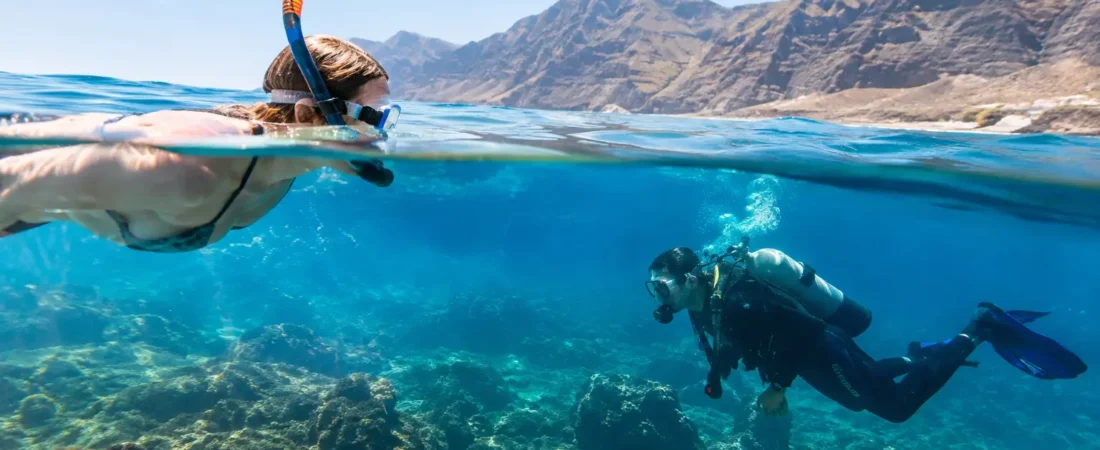
The moment your face goes below the surface, snorkelling and scuba feel very different. If you are searching for try diving versus snorkelling Tenerife, the real question is not which activity is better. It is which one will give you the kind of experience you want from your holiday: a relaxed look at the surface, or the chance to breathe underwater and spend time properly observing the seabed.
For many visitors staying around Los Cristianos, Playa de las Américas or Costa Adeje, snorkelling sounds like the simpler option. It can be. But a private try dive is often more accessible than people expect, especially when a qualified instructor takes time to explain every step and stays beside you throughout the experience.
Try diving versus snorkelling Tenerife: the main difference
Snorkelling keeps you at the surface. You wear a mask, snorkel and fins, floating face-down while breathing through the tube. On a calm day with clear water, it is an easy way to see fish near rocks, shallower reefs and sandy coves. You do not need a certificate, and you can usually learn the basics in a few minutes.
A try dive takes you below the surface with scuba equipment. Instead of lifting your head to breathe, you breathe normally from a regulator while an instructor manages the pace, depth and safety of the session. You have time to look around rather than constantly adjusting your position at the surface.
That extra dimension changes the experience. Fish that seem distant from above can be seen at eye level. Rock formations, volcanic textures and life close to the seabed become part of the view. In Tenerife, the underwater landscape is often as memorable as the marine life itself.
Neither activity guarantees sightings of a particular animal. Conditions, season, location and simple luck all matter. The pleasure of a try dive is not only about finding turtles or rays. It is about the quiet feeling of being underwater, moving slowly and seeing the coast from a completely different perspective.
Which is easier for a complete beginner?
Snorkelling has less equipment and no pressure changes to manage, so it is usually the quicker activity to start. However, it is not automatically more comfortable for everyone. Some people dislike having their face in the water, struggle to clear a snorkel after a splash, or feel tired from finning against small waves.
With a private beginner scuba diving experience, the initial briefing is longer, but the support is much closer. Before entering the sea, your instructor explains how the equipment works, how to breathe from the regulator and what to do if water enters the mask. You practise simple skills in shallow water, without being rushed.
For nervous first-timers, this individual attention matters more than the activity itself. A good instructor will not push you deeper or faster than you feel ready to go. You can take a moment at the surface, repeat a skill, or decide to stay shallower. The aim is comfort and control, not proving anything.
You do need to be able to swim and feel reasonably at ease in the water for either activity. Scuba diving also involves a health questionnaire, and certain medical conditions, recent illnesses or medications may require advice from a diving doctor before taking part. Being honest about your health is part of a safe, enjoyable session.
Depth, time and what you can see
Snorkelling gives you a broad view from above, especially in bright, clear water. It works well for people who want a short sea activity between other holiday plans, or for families where some members prefer not to go underwater. The best moments tend to happen when the sea is calm and there is life close to the surface.
A try dive gives you a closer, calmer perspective. You are not watching the seabed from several metres above it. You are alongside it, with time to notice small fish sheltering in rocks, sea urchins in crevices and changing colours on the volcanic formations. Even at modest depths, the sense of space is completely different.
Scuba sessions normally feel more immersive because you are able to stay underwater for longer than you could by holding your breath. Your instructor chooses a suitable site and profile for the conditions and your confidence. In South Tenerife, shore-based sites can offer an easy entry and a gradual start, which is particularly helpful for first dives.
Water clarity can vary with weather, swell and currents. Tenerife is known for generally pleasant diving conditions, but no responsible operator should promise perfect visibility every day. Flexibility and local knowledge are valuable, particularly if you have limited days available during your holiday.
Comfort in the water: an honest comparison
If you enjoy swimming, feel calm with your face in the water and only want a light introduction to the sea, snorkelling may be exactly right. It is lower commitment, requires less preparation and can be enjoyable without a formal lesson.
If you have always wondered what it is like to breathe underwater, snorkelling may leave you wanting more. You may see plenty from the surface, but you cannot pause beside a rock formation or follow the natural route of the seabed. A try dive is designed for that first proper underwater experience.
Some guests worry that scuba equipment will feel heavy or complicated. On land, the cylinder and jacket do have weight. In the water, however, the equipment becomes much lighter, and your instructor helps you find a comfortable position and buoyancy. You do not need to memorise technical information or manage the dive alone during a beginner experience.
Feeling cold is another practical consideration. A suitable wetsuit is important, even in Tenerife, because time in the water can cool the body more quickly than expected. For a guided try dive, equipment should be selected and adjusted for you, including the mask, fins and wetsuit. That removes much of the uncertainty for visitors who have never used diving gear before.
Safety and supervision make the difference
Snorkelling is simple, but it still deserves sensible planning. Avoid going alone, stay within your ability, check the sea state and keep clear of boat traffic. Strong sun, waves and fatigue can affect even confident swimmers.
A private try dive adds structured supervision. Your instructor checks the equipment, explains the plan, monitors how you are feeling and stays close throughout the underwater part of the experience. This is especially reassuring for couples where one person is excited and the other is hesitant, or for small groups with different confidence levels.
Private diving also allows the session to move at your pace. Large group activities can work well for some travellers, but they are not ideal if you need extra time with a mask skill, would prefer a quieter start, or simply want photographs without feeling hurried. Personal attention is not a luxury when you are trying scuba for the first time. It can make the difference between feeling overwhelmed and feeling genuinely relaxed.
When snorkelling is the better choice
Choose snorkelling if you want a short, surface-level activity, are confident in open water and have no wish to use scuba equipment. It can also suit someone accompanying a diver who prefers to stay near the surface.
Choose a try dive if the thought of breathing underwater excites you, even if you are slightly nervous. It is the stronger choice for travellers who want a memorable first experience rather than simply a quick look into the sea. Couples and small private groups often appreciate having the instructor’s full attention, a clear briefing and the time to settle in properly.
If you are already certified, neither option replaces a guided dive. Certified divers can get far more from Tenerife’s underwater scenery with an instructor who knows the local conditions and can choose a site suited to experience level, weather and what is currently being seen.
Making your first underwater experience feel simple
The best preparation is modest: arrive rested, eat a light meal beforehand, bring swimwear and listen carefully to the briefing. Avoid treating the activity as something to squeeze in immediately before flying, as scuba diving requires an appropriate surface interval before air travel. Your instructor can advise on the right timing for your plans.
At Lov’Ocean, private experiences are built around a relaxed introduction rather than a production line. Equipment, guidance and a pace adapted to the guest help turn a first dive into something manageable and personal.
There is no need to decide that you are a “diving person” before you get in the water. Snorkelling may be your perfect choice, or a private try dive may be the holiday moment you keep talking about long after you have left Tenerife.