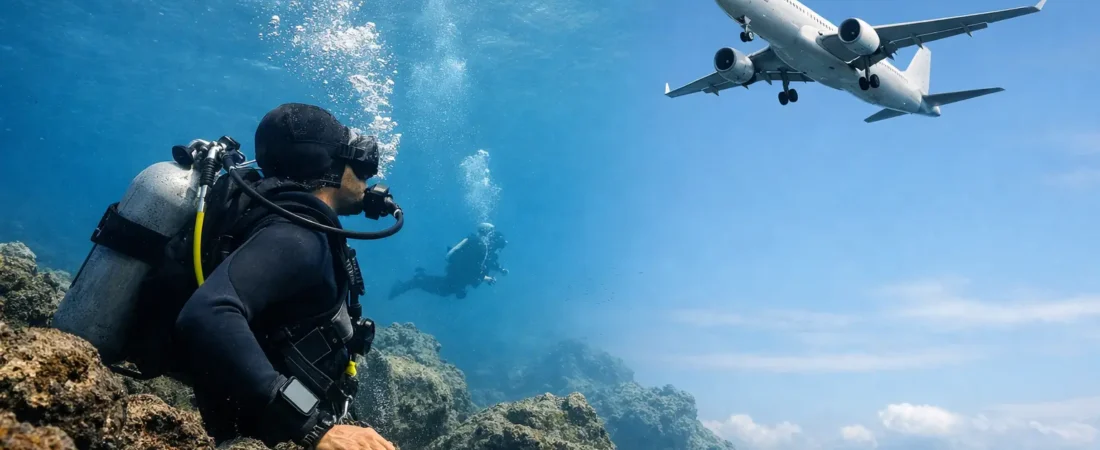
That last day of a Tenerife holiday can feel tightly timed: a morning in the sea, a shower, lunch by the coast, then the airport. But flying after diving is one part of your itinerary that should never be rushed. Allowing the right surface interval before a flight is a simple, essential way to protect your wellbeing and finish a beautiful diving experience calmly.
For many guests, especially those enjoying a first private dive, the good news is straightforward: with sensible planning, there is usually no need to choose between seeing Tenerife underwater and catching your flight. You simply need to arrange the two in the right order.
Why flying after diving needs a wait
While you dive, your body absorbs extra nitrogen from the compressed air you breathe. This is a normal part of scuba diving. As you return to the surface, that nitrogen gradually leaves your body through breathing.
An aircraft cabin is pressurised, but not to sea-level pressure. As the cabin pressure falls during the climb, any remaining nitrogen has more opportunity to form bubbles in body tissues. In some circumstances, this can contribute to decompression sickness, also known as the bends.
The purpose of a surface interval is to give your body time to release enough nitrogen before you travel to altitude. It is not about whether you feel tired, fit or completely fine after your dive. Decompression sickness can be serious, and the safest approach is to follow recognised guidance rather than make a judgement based on how you feel.
This is also why a relaxed plan matters. A private experience can be paced around you in the water, but your onward travel still needs a sensible margin afterwards.
How long should you wait before flying?
The appropriate wait depends on the type and number of dives you have made. The following recommendations are widely used for recreational divers flying in a commercial aircraft:
- After a single no-decompression dive, wait at least 12 hours before flying.
- After multiple dives in one day, or dives over several days, wait at least 18 hours before flying.
- After a dive that requires decompression stops, a longer interval is needed. A minimum of 18 hours is often cited, but your dive computer, training agency guidance and instructor’s advice should guide the decision.
- If you have any symptoms that could be linked to decompression sickness, do not fly. Seek urgent medical advice instead.
These timings are minimums, not targets to shave by a few minutes. If your flight leaves at 10.00 am, a dive ending at 10.30 pm the previous evening does not create a full 12-hour interval. Build in room for the drive, airport check-in and the possibility of an earlier-than-expected boarding time.
For a first-time scuba experience, the dive profile is normally simple and carefully supervised. Even so, the same rule applies. A baptism dive is still a scuba dive, and the flight schedule should be considered before you enter the water.
The easiest way to plan diving around your flight
The most comfortable option is to dive early in your holiday, rather than on the day before you fly home. It gives you plenty of flexibility and leaves your final day free for a slow breakfast, a beach walk or simply packing without watching the clock.
If your holiday schedule only allows diving near the end of your stay, choose a session that leaves the required interval before departure. For example, an afternoon flight the following day can work well after a morning dive, provided the correct waiting time is respected. An early morning flight, however, usually means the previous day should be kept dive-free.
Certified divers planning several guided dives should mention their return flight when arranging the itinerary. Consecutive dive days can be an excellent way to enjoy Tenerife’s volcanic landscapes, but they need to be matched carefully to the final no-fly interval.
At Tenerife Scuba Diving, planning starts with your experience level and your holiday timetable. Sharing your flight day and departure time when you enquire makes it easier to recommend a session that feels unhurried from beginning to end.
Planning a dive during your stay in Tenerife? Tell us when you fly home, and we can help you choose the right day and time.
A few details that can change the advice
The standard 12- and 18-hour guidance is useful, but diving is never entirely one-size-fits-all. Depth, bottom time, repeated dives, ascent profiles and individual factors all influence nitrogen loading. Your dive computer records information specific to your dives, so its no-fly indication should always be taken seriously.
Alcohol, dehydration and physical exhaustion are not good companions to diving or flying. They do not replace the need for a surface interval, but avoiding them helps you look after yourself. Drink water, eat properly, rest after your dive and keep the rest of the day gentle.
Altitude before a flight matters too. Tenerife’s dramatic mountain roads are part of the island’s appeal, but travelling significantly uphill after diving should be discussed with your instructor. The same principle applies: altitude reduces ambient pressure. A coastal afternoon after your dive is generally the simpler plan.
If you are pregnant, have a medical condition, take regular medication or have had a recent illness, ask a qualified diving medical professional for individual advice before diving. This is not a reason to worry unnecessarily. It is simply part of making a thoughtful decision that suits you.
What about flying into Tenerife before diving?
Arriving by plane and diving later that day is different from flying after diving. For most healthy recreational divers, a flight to Tenerife does not create the same decompression concern because you have not yet been breathing compressed air underwater.
Still, travel can leave you dehydrated, tired or affected by a poor night’s sleep. If you have an early flight and want to dive on arrival, be honest about your energy levels. A premium private session allows time to settle in, ask questions and proceed at a pace that feels comfortable. Sometimes the best choice is a later session or the following morning.
Questions guests often ask
Can I dive on the day before my flight?
Yes, often you can. The key is the time between the end of your final dive and your flight. For one simple no-decompression dive, allow at least 12 hours. For multiple dives or several days of diving, allow at least 18 hours. When in doubt, choose more time, not less.
Can I fly if my dive computer says I still have no-fly time remaining?
No. Your computer’s no-fly warning is based on your actual recent dive profile. Wait until that time has passed, even if a general rule of thumb appears shorter.
Does a short, shallow beginner dive mean I can fly sooner?
No. A first dive may be shorter and shallower, but it is still important to respect the recommended minimum interval. Keeping the rule simple removes unnecessary uncertainty on your travel day.
What should I do if I feel unwell after diving?
Do not board a flight just because your departure is booked. Symptoms such as unusual fatigue, dizziness, tingling, joint pain, weakness, breathing difficulty or a skin rash after diving need prompt medical assessment. Tell the medical team that you have been scuba diving and describe your dive activity clearly.
A holiday should leave you with the quiet satisfaction of having done something remarkable, not anxiety about the journey home. Put your dive before your flight in the calendar, give your body the time it needs, and let the final hours of Tenerife be as relaxed as the time you spent underwater.