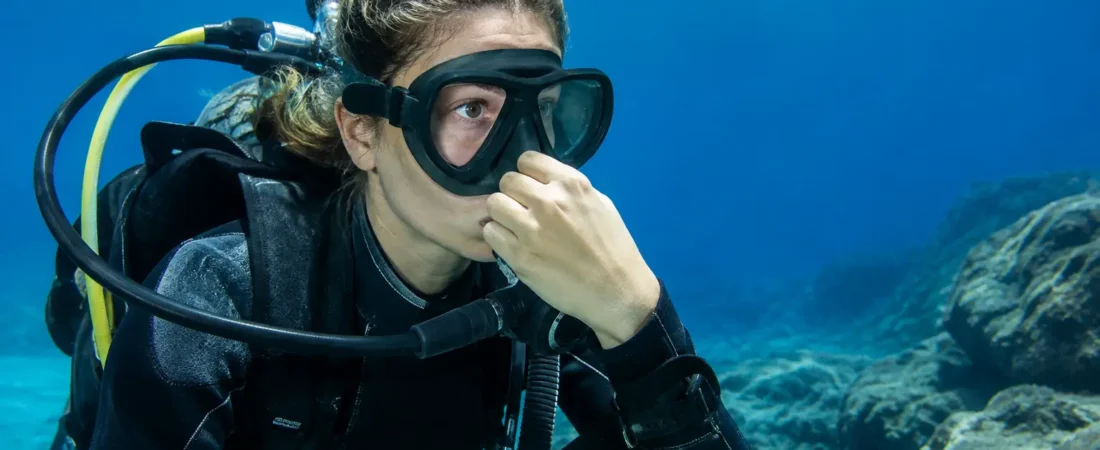
The first feeling of scuba ear pressure can be surprising: a gentle squeeze in the ears as you descend, often before you have even had time to admire the water around you. It is also one of the most common concerns for first-time divers. The reassuring part is that, with the right pace and calm guidance, equalising is usually a simple skill rather than something to fear.
Your ears are not a test of bravery. If they do not feel comfortable, the answer is never to push through. A relaxed descent, clear communication and an instructor who responds to you make all the difference.
Why scuba ear pressure happens underwater
As you go down, the water pressure around your body increases. The air space behind each eardrum needs a little more air to match that changing outside pressure. Equalising lets air move through the Eustachian tubes, the small passages linking the back of the nose to the middle ear.
If this does not happen soon enough, you may feel fullness, pressure or a mild ache. Left unaddressed, that discomfort can become painful. This is why divers equalise early and often, rather than waiting until pressure is obvious.
The same principle affects your mask. A small amount of air breathed gently through the nose relieves the pressure inside it. For most beginners, the ears need a little more attention, especially during the first few metres of descent when the pressure changes most noticeably.
The calmest way to equalise your ears
The best technique is the one that works comfortably for you. Many divers begin with the Valsalva manoeuvre: gently pinch the nostrils closed and blow very softly as if trying to exhale through the nose. The key word is gently. There should be no strain, no hard blowing and no attempt to force a stubborn ear to clear.
You can also swallow, move your jaw as if chewing, or gently wiggle it from side to side. Some people find that looking slightly upwards helps. Others prefer the Toynbee method, which involves pinching the nose and swallowing. An instructor can help you try these options on the surface before entering the water, so nothing feels unfamiliar below.
Start equalising before you feel pressure, then repeat it frequently as you descend. Think of it as a light, regular habit. Many experienced divers clear their ears every half metre or so at the beginning, then continue whenever needed. Going slowly is not a compromise. It is the most comfortable way to let your body adapt.
If one ear will not clear
Stop descending as soon as you feel discomfort. Signal your instructor, move slightly upwards until the sensation eases, and try again gently. Often, rising just a little is enough to allow the ear to equalise.
If it still will not clear, do not keep trying at the same depth or force the technique. A good dive can wait. On a private introductory experience, there is time to pause, reset and decide what feels right for you. Sometimes a slower second attempt works beautifully. Sometimes the sensible choice is to stay shallower or postpone the dive. Both are completely valid outcomes.
What not to do when your ears feel blocked
The most common mistake is continuing down while hoping the discomfort will disappear. It will not. Descending makes the pressure difference greater, so even a mild ache deserves an immediate pause.
Avoid blowing forcefully against a pinched nose. Strong pressure can irritate the ears and may make equalising harder rather than easier. Do not descend head-first if you are struggling either. Keeping a more upright position can feel easier and gives you better control of your depth.
It is also wise not to rely on decongestant sprays or tablets simply to make a dive possible. Their effects can wear off underwater and create problems on the way back up. If you are considering any medication, speak to a qualified medical professional first and tell your instructor before the activity.
Colds, allergies and the decision to postpone
A blocked nose on holiday can feel like a small inconvenience. For scuba diving, it can matter more than you expect. A cold, sinus congestion, ear infection or active allergy flare-up may prevent the Eustachian tubes from working normally.
If you cannot equalise easily on land, it is unlikely to become easier underwater. Postponing is the safe, sensible decision, even when the sea looks inviting and you had been looking forward to the experience. Your comfort comes first.
There is a little nuance here. Mild seasonal allergies do not automatically rule out diving, particularly if you feel well and can clear your ears normally. But only an individual assessment can determine what is appropriate. Be open about how you feel rather than trying to minimise symptoms. It helps your instructor adapt the plan responsibly.
Anyone with a history of ear surgery, recurring ear infections, a perforated eardrum, significant hearing issues or persistent sinus problems should seek advice from a diving-aware doctor before diving. This is not about making the experience complicated. It is about protecting an area of the body that needs to function well for you to enjoy it.
Ear pressure on the way back up
Most people find the ascent easier because expanding air usually leaves the middle ear naturally. Occasionally, however, an ear can feel blocked during the ascent. This is sometimes called a reverse block.
If you feel pressure or pain while coming up, tell your instructor straight away. The usual response is to stop, descend a little if appropriate and give the ear time to settle before continuing slowly. Do not try to force an equalisation manoeuvre on ascent. A calm, controlled response is what matters.
After the dive, your ears may feel slightly full for a short time, especially after a first experience. Pain, reduced hearing, ringing, dizziness or a feeling that does not settle are not symptoms to ignore. Stop diving and seek medical advice. It is always better to be checked than to guess.
How a personalised introduction makes a difference
For a first dive, ear pressure is often as much about confidence as technique. When you know you can stop at any point, communicate easily and take the descent at your own pace, it is much easier to stay relaxed. Tension can make the jaw tighten and breathing become shallower, neither of which helps equalising.
Before entering the water, a thoughtful instructor should explain the hand signals, practise the equalising movement with you and make sure your mask feels comfortable. Underwater, the descent should be gradual, with regular pauses and close attention to how you are feeling. There is no prize for reaching depth quickly.
Tenerife’s clear conditions and sheltered coastal sites can offer a lovely setting to learn, but the principle remains the same wherever you dive: comfort leads the experience. At Lov’Ocean, a private approach allows the pace to be adapted around the person in the water, whether that means extra time on the surface, a very gradual descent or simply enjoying a shallower exploration.
A simple pre-dive routine for happier ears
The evening before, sleep well, drink water and avoid arriving rushed. On the day, eat a light meal if that suits you, but do not come exhausted or dehydrated. These details will not physically clear your ears, yet they can make you calmer and more aware of how your body feels.
When putting on your equipment, take a moment to practise swallowing and gently moving your jaw. Let your instructor know if one ear has historically been more difficult than the other. Once in the water, begin equalising early, breathe slowly and remember that pausing is part of the process, not a problem.
A comfortable first descent often starts with one simple decision: listen to your ears before they have to ask loudly. Give yourself permission to go slowly, and the underwater world has a much better chance to feel exactly as it should – peaceful, personal and memorable.