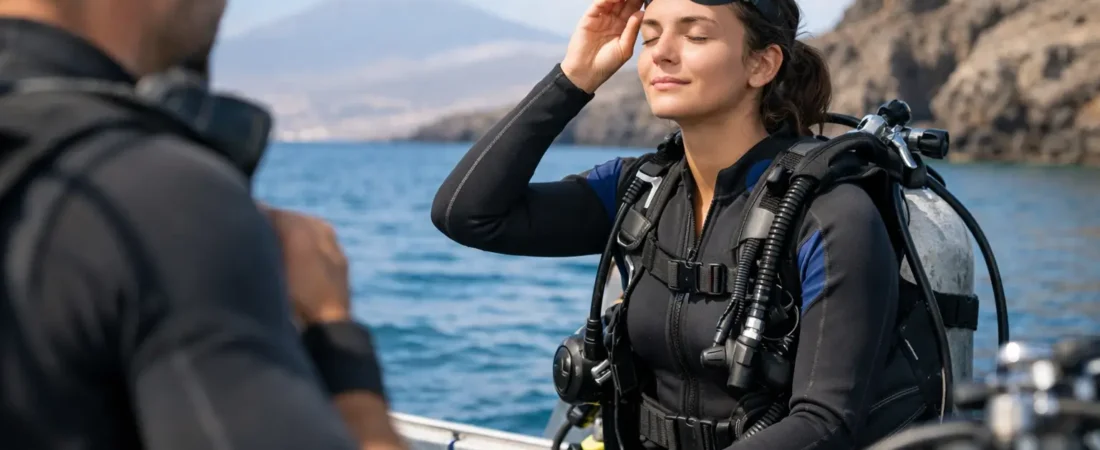
The moment before your first scuba dive can feel surprisingly busy: a mask to adjust, unfamiliar equipment around you, the sound of the sea, and a perfectly reasonable question in your mind: “What if I feel nervous underwater?” Learning how to feel calm before first scuba dive is not about forcing yourself to be fearless. It is about arriving prepared, being supported by the right instructor, and giving yourself permission to take everything one step at a time.
For many first-time divers, the nerves fade much sooner than expected. Once you are floating at the surface, breathing steadily, and focused on one simple instruction at a time, the experience often becomes quieter and more peaceful than life above the water.
Start with a realistic expectation
A first scuba dive is new, and new experiences can make the body alert. Feeling excited, slightly tense, or unsure does not mean you are unsuitable for diving. It means you understand that the sea deserves respect.
The goal is not to arrive feeling completely relaxed. The goal is to know that you will not be rushed. A well-planned beginner experience begins with a clear explanation on land, where you can ask questions and become familiar with the equipment before getting into the water. You should understand what will happen, why each step matters, and how your instructor will stay close to you throughout.
There is no prize for moving quickly. Take the time you need to put on your mask, settle your breathing, and get comfortable in the water. A calm first dive is built on small, manageable moments.
Choose personal guidance, not pressure
The person guiding you has a major effect on how you feel. A certified instructor should be attentive, clear, and patient, especially when you have never used scuba equipment before. They are there to manage the practical details and watch over your comfort, so you can concentrate on the experience itself.
Private instruction is particularly reassuring for beginners. It allows the pace to be adapted to you. If you want an explanation repeated, need an extra minute on the surface, or simply want to pause and breathe, there is space to do so without feeling that you are holding anyone up.
At Tenerife Scuba Diving by Lov’Ocean, this individual approach is central to the experience. Before entering the water, your instructor explains the essential skills in simple language and checks that you feel ready. Underwater, you remain close together, with calm communication and support throughout.
Practise slow breathing before you arrive
Your breathing is the quickest route back to calm. When people feel anxious, they often breathe faster and more shallowly. With scuba, the opposite is helpful: slow, comfortable breaths in and out through the regulator.
You do not need a complicated exercise. In the days before your dive, take two minutes to breathe in gently through your nose and out slowly through your mouth. Notice the longer exhale. This helps teach your body that it is safe to settle.
On the day, do the same while standing by the water. Once you place the regulator in your mouth, take a few easy breaths at the surface before thinking about going below. The sound may feel unusual for the first few seconds. Then it often becomes reassuring: a steady reminder that you have air and that your instructor is beside you.
Try not to take huge breaths or hold your breath. Comfortable, unforced breathing is best. Your instructor will remind you of this during the briefing.
Make peace with the equipment on land
Much of the anxiety around a first dive comes from unfamiliarity rather than the water itself. A mask, fins, buoyancy jacket, regulator, and cylinder can look like a lot when laid out together. Once each item is introduced calmly, however, the picture becomes much simpler.
You do not need to memorise technical names or understand every detail. You only need to know what you will use and how it will feel. The mask lets you see clearly. The regulator gives you air. The buoyancy equipment helps you float comfortably. Your fins help you move slowly and efficiently.
Ask to try the mask and regulator before entering the sea. Feel how the mouthpiece sits. Take a few breaths. Let your instructor adjust anything that feels uncomfortable. A mask that fits well and equipment chosen carefully for you can make a noticeable difference to your confidence.
Think in the next small step
Nerves grow when the mind tries to imagine the whole experience at once: the entry, the descent, the underwater world, and the return to shore. Instead, reduce the day to the next step.
First, listen to the briefing. Then put on the equipment. Then enter the water and float. Then breathe calmly on the surface. Only when you feel comfortable do you begin to go a little deeper.
This approach is especially useful in the clear, sheltered conditions often found around Tenerife’s southern coast. There is no need to hurry towards depth. The first moments close to the surface are already part of the experience. You can look around, notice how buoyant you feel, and let your body adjust.
If you decide you need more time, say so. Good diving is based on communication, not bravado.
Know that you are allowed to stop
One of the most calming things to remember is that you remain in control. You can signal that you want to slow down, pause, or return to the surface. Your instructor will explain the hand signals before the dive, and you will practise the essential ones in a relaxed setting.
This does not mean you should expect a problem. It means you have a plan, which removes much of the uncertainty. Knowing that you have options helps the mind stop searching for danger.
A thoughtful instructor will also read your body language. If you appear tense, they can pause, make eye contact, and guide you back to slower breathing. There is no need to prove anything. Your first dive should feel like a discovery, not a test.
Prepare your body kindly on the day
Small practical choices can reduce nerves more than people expect. Have a light meal beforehand rather than arriving hungry or overly full. Drink water, especially in Tenerife’s warm sunshine, and avoid excess alcohol the night before. Choose swimwear that feels secure and comfortable beneath your diving equipment.
Give yourself enough time to arrive without rushing. If transport or meeting arrangements are part of your booking, confirm them in advance so the morning feels simple. A calm start on land sets the tone for the water.
It also helps to be honest about anything relevant, such as a tendency towards seasickness, a recent cold, or anxiety in enclosed spaces. This is not something to hide. Sharing it allows your instructor to advise you properly and tailor the experience where possible. If you are unwell or have blocked ears, postponing is sometimes the sensible choice. The sea will still be there.
Replace “what if?” with curiosity
Before a first dive, it is easy to focus on what could go wrong. Try giving your attention a different job. Notice the colour of the water. Listen to the briefing. Imagine the moment when you are weightless and quietly observing the volcanic seabed.
You do not need to know what marine life you will see for the dive to feel special. The pleasure is often in the details: shafts of light moving across the water, the rhythm of your own breathing, and the unexpected calm of being beneath the surface.
Bring your questions, take your time, and let the experience begin gently. With patient guidance and a pace that feels right for you, your first breath underwater may be the moment you realise you are calmer than you thought.