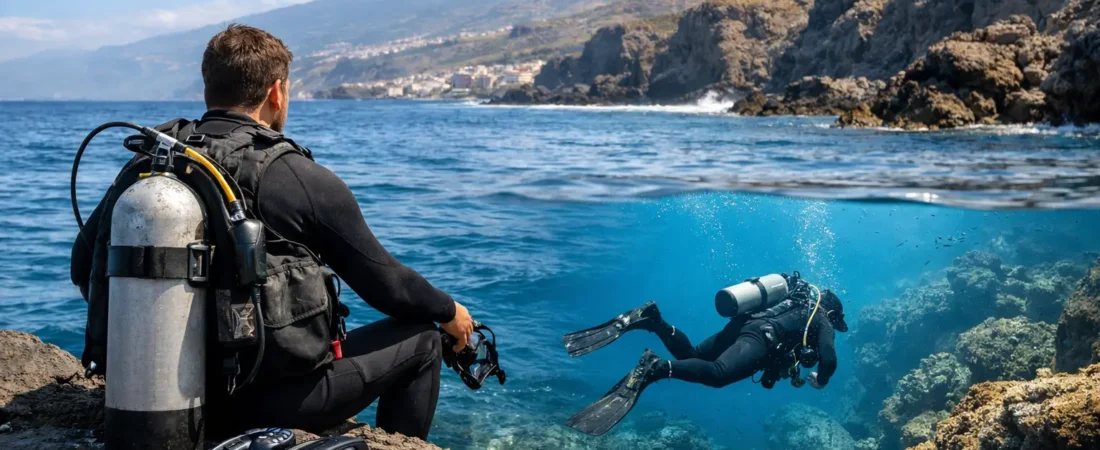
The sea can look wonderfully simple from the shore at Tenerife: clear water, volcanic coastline and a moment that feels far removed from everyday life. Knowing how to prepare for diving helps keep that feeling intact. A little preparation means you can arrive relaxed, focus on your instructor’s guidance and enjoy the experience at your own pace.
Whether this is your first underwater breath or a guided dive during your holiday, preparation is less about mastering technical details and more about arriving well, communicating openly and allowing enough time for the experience.
How to prepare for diving: start with your wellbeing
The most useful preparation happens before you pack a bag. Diving is accessible to many people, but you should be honest about how you feel physically on the day. A cold, blocked ears, chest infection, fever or significant tiredness can make equalising uncomfortable and may mean it is wiser to postpone.
If you have asthma, heart or lung conditions, diabetes, a history of ear problems, are taking regular medication, have recently had surgery, or are pregnant, seek appropriate medical advice before booking. A qualified instructor will also ask relevant health questions. This is not a formality: clear answers allow them to make careful decisions around your comfort and safety.
You do not need to be an athlete for an introductory dive. Being reasonably comfortable in the water and able to follow instructions calmly matters far more than speed or strength. For certified divers, recent experience and an honest conversation about your last dive will help your guide plan a suitable outing.
The evening before, prioritise sleep, drink water and avoid excessive alcohol. Tenerife’s warm weather can be deceptive, particularly after a day in the sun. Hydration and a light, normal meal leave you feeling better than arriving hungry, dehydrated or overly full.
Plan your day around the sea
Give your dive the space it deserves. Avoid scheduling it immediately after a long night out, an exhausting hike or a packed morning of activities. You will get much more from the briefing and the underwater scenery when you are not rushing from one plan to the next.
It is also sensible to think ahead about flying. Do not plan to dive just before a flight. The recommended surface interval depends on the type and number of dives, so share your travel plans when booking and follow your instructor’s advice. If diving is one of the highlights of your Tenerife stay, arranging it earlier in the holiday often makes the final days more relaxed.
For guests staying in Los Cristianos, Costa Adeje, Playa de las Américas or nearby areas of Tenerife South, confirm the meeting time and any collection arrangements in advance. Knowing where you need to be, and when, removes the small uncertainties that can distract from a special experience.
What to bring for a comfortable dive
For most beginner experiences, the essential diving equipment is provided and fitted for you. That includes the items that must feel right, such as the mask, fins, wetsuit and breathing equipment. Your role is simply to bring a few personal basics.
A practical bag usually contains:
- Swimwear to wear beneath your wetsuit
- A towel and dry clothes for afterwards
- Sun cream for before and after the water, rather than immediately before entering it
- Drinking water and anything you need after the activity
- Your certification card and logbook details, if you are a certified diver
Leave valuable jewellery and unnecessary items at your accommodation. If you wear contact lenses, mention this before the session. Many people dive comfortably with soft lenses, but it is useful for your instructor to know. Glasses cannot be worn inside a standard dive mask, although prescription mask solutions may be possible with prior planning.
If you feel the cold easily, say so. Water temperature, weather and personal comfort vary. A well-fitted wetsuit makes a real difference, and an attentive instructor can help you choose the right level of protection.
Tell your instructor what you need
A private diving experience works best when it is genuinely tailored to you. Tell your instructor if you are nervous, if deep water worries you, if you have had difficulty clearing your ears before, or if you simply prefer to take things slowly. There is no advantage in pretending to be more confident than you feel.
For a first dive, you will be shown how the equipment works, how to breathe underwater and how to communicate using simple hand signals. You will practise key skills in calm, shallow water before progressing only when you feel ready. The aim is not to rush through a checklist. It is to make the unfamiliar feel manageable, one clear step at a time.
Certified divers should share their qualification level, recent diving history, preferred depth range and any equipment preferences. Tenerife’s volcanic sites can offer striking rock formations, lava landscapes and changing light, but the right site and pace depend on conditions and experience. A good plan is always shaped by the day, not by a fixed promise.
At Lov’Ocean, this personal conversation is part of the preparation, not an afterthought. It helps create a calm experience where the briefing, equipment fitting and time in the water all feel considered.
On the day: slow is a good pace
Arrive a little early so there is time to settle in, use the facilities and ask questions without pressure. During the equipment fitting, let your instructor know if anything feels too tight, loose or uncomfortable. A mask that fits properly and fins that feel secure are small details with a large effect on confidence.
Listen carefully to the briefing, especially the parts about equalising your ears, staying close to your instructor and communicating underwater. Equalising should begin early and be done gently. If it does not feel right, signal immediately. You should never force it or continue through pain.
Once in the water, breathe slowly and naturally. Many first-time divers are surprised by how quickly the initial excitement settles when they focus on a steady breath and the instructor beside them. There is no need to perform, prove anything or remember every detail at once. Your instructor is there to manage the practical elements while you become comfortable with the new sensation of being underwater.
Photos can be a lovely part of the day, but they should never interrupt your comfort or awareness. Get settled first. The best images tend to happen when you are relaxed enough to look around, notice the volcanic surroundings and enjoy the moment rather than pose for it.
After the dive, protect the feeling
Take a few minutes to warm up, drink water and talk through what you saw and felt. First dives often bring a mixture of pride, calm and a desire to understand more. Ask questions while the experience is fresh, whether you are curious about the equipment, local marine life or your next step towards certification.
Avoid strenuous exercise and heavy drinking afterwards, and continue following the guidance given by your instructor. If your ears feel unusual or you have any concern, mention it before you leave rather than brushing it aside.
The best preparation is not about arriving as an expert. It is about giving yourself permission to be new, being open about your needs and choosing an experience with enough time and attention to let confidence grow naturally. Tenerife’s underwater world will still be there when you take that first calm breath.