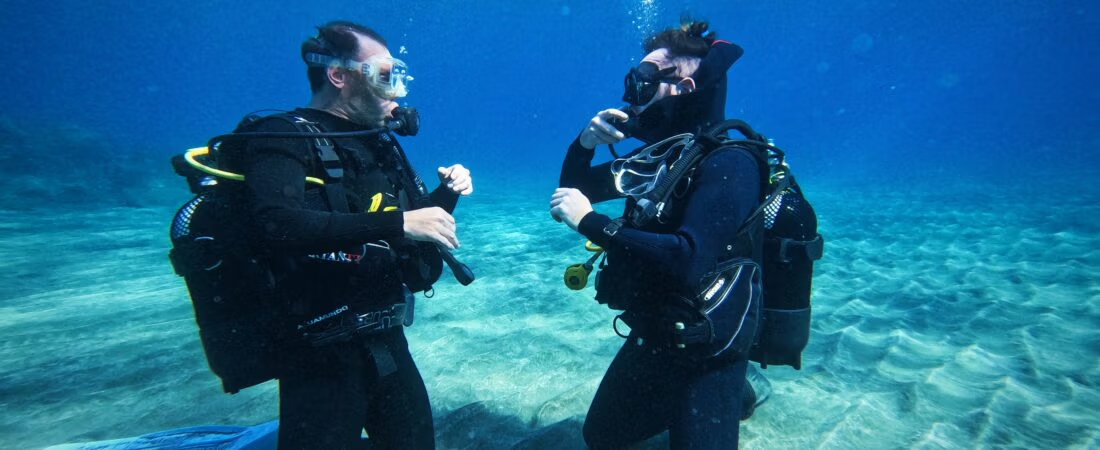
The moment most people remember is not jumping in. It is the first quiet breath underwater. One second you are noticing the mask, the regulator and your own nerves. The next, everything slows down. If you are wondering what to expect on a first dive Tenerife, that shift from apprehension to calm is often the biggest surprise.
Tenerife is a very good place to try scuba for the first time because conditions are often gentle, the water is usually comfortable for much of the year, and many entry points suit beginners well. That said, your experience depends less on the island alone and more on how well the session is prepared, explained and adapted to you. A first dive should feel supported from the start, not rushed.
What to expect on a first dive in Tenerife before you enter the water
Your first dive starts on land. Before any equipment goes on, you will usually be asked a few simple questions about your health, swimming confidence and previous experience. This is not a formality. It helps your instructor tailor the session to your pace and make sensible decisions from the outset.
Then comes the briefing. For a beginner, this is one of the most important parts of the experience. A good briefing is clear, calm and practical. You do not need a lecture on diving theory. You need to know how to breathe, how to equalise gently as you descend, what hand signals you will use, and what to do if something feels odd or uncomfortable. When this is explained well, the equipment feels much less intimidating.
You will also be fitted with your gear. For many first-time divers, the jacket and cylinder look heavier than expected on land, but in the water that weight largely disappears. Your mask should feel secure without pinching, and your fins should be snug enough to stay in place without rubbing. If anything feels wrong before you begin, it is worth saying so. Small adjustments make a big difference once you are in the sea.
The part most beginners worry about
It is usually not the marine life or the depth. It is breathing. People often ask whether breathing through a regulator feels unnatural. At first, yes, slightly. You are aware of each inhale and exhale, and that can make you feel self-conscious for a minute or two. Then your breathing settles, especially if your instructor encourages you to slow down and take easy, steady breaths.
The second common concern is equalising the ears. This simply means balancing pressure as you go down. Some people manage it immediately. Others need a little more time and a slower descent. There is no prize for getting down quickly. On a first dive, comfort matters more than speed, and a patient descent usually leads to a much better experience.
Nerves are normal too. Even confident swimmers can feel a flicker of hesitation before submerging. That does not mean diving is not for you. It often means you are doing something new in an unfamiliar environment. With calm guidance, that initial tension usually eases very quickly.
Your first moments underwater
Once your face is in the water and you begin to breathe through the regulator, the world changes in a very particular way. Sounds become softer. Movements become slower. You are not walking or swimming in the usual sense. You are hovering, adjusting, learning how small movements affect your position.
At the beginning, you may focus mostly on yourself – your breathing, your ears, your hands, whether the mask feels right. That is completely normal. After a few minutes, attention tends to widen. You start noticing the volcanic rock formations, the light moving through the water, the texture of the seabed and the surprising sense of space around you.
A first dive in Tenerife often introduces you to dramatic underwater scenery as much as to marine life. The island’s volcanic character gives many dive sites a raw, sculpted feel that is very different from a pool or a sandy shoreline. This is one of the reasons beginners often find the experience so memorable. It feels like entering another landscape, not just another activity.
How long and how deep a first dive usually feels
For a beginner session, the underwater part is usually long enough to feel real, but short enough to remain comfortable. Exact timings depend on conditions, your air consumption and how relaxed you feel in the water. If someone tells you a first dive always looks the same, be cautious. It depends.
The same is true of depth. A first dive is not about going deep. It is about staying in a safe, manageable zone where you can breathe calmly, practise a few simple skills and enjoy the surroundings. For some people, a modest depth already feels extraordinary. There is no need to push further to make the experience worthwhile.
This is where personalised supervision matters. One person may settle immediately and be ready to continue with confidence. Another may need more time near the surface before descending fully. Both are valid first dives.
Comfort, safety and the pace of the session
The best first dives do not feel theatrical. They feel smooth. You know who is looking after you, you know what will happen next, and you never feel left to guess. That sense of calm comes from good instruction, sensible planning and a pace that respects the fact that you are learning in real time.
Safety is built into each stage of the experience. Your instructor will stay close, check how you are feeling, and guide you through each step rather than expecting you to remember everything at once. This matters even more for beginners who are excited but slightly unsure. Reassurance is not an extra. It is part of the service.
Comfort also includes the practical details around the dive. Having the equipment prepared for you, receiving clear explanations, and not having to puzzle out logistics on your own changes the tone of the whole experience. Premium diving is not about unnecessary luxury. It is about removing avoidable stress so you can focus on the water.
What you might see on a first dive in Tenerife
Most first-time divers hope to see something memorable, and Tenerife certainly has plenty to offer. You may encounter schools of fish, reef life and striking volcanic underwater terrain. Light conditions can be beautiful, particularly when visibility is good and the sun reaches the rock formations below.
Still, the right mindset is to stay open rather than arrive with a checklist. Marine life is never a performance. Some days feel busy, others quieter. The real reward of a first dive is often broader than a single sighting. It is the sensation of breathing underwater, moving slowly through a new environment and realising that you can do it.
That is also why underwater photos can be such a lovely part of the experience. When the session is relaxed and well paced, those images capture genuine enjoyment rather than relief at having finished.
Is a first dive in Tenerife difficult?
For most people, it is more accessible than expected. You do not need to be an athlete, and you do not need previous scuba experience. Reasonable comfort in the water helps, but your instructor’s role is to guide you step by step.
The challenge is usually mental rather than physical. Accepting the unfamiliar feeling of breathing through equipment, trusting the process, and allowing yourself a few minutes to adapt are the main hurdles. Once those settle, many beginners are surprised by how natural it starts to feel.
Of course, not every first dive is identical. Sea conditions vary, people vary, and confidence levels vary. A calm private experience, where the session is built around your rhythm, tends to suit first-timers particularly well because it leaves room for questions, pauses and reassurance.
After the dive
Back on the surface, most beginners have the same expression – part pride, part disbelief. The dive often feels shorter than expected once it is over, which is usually a sign that you became absorbed in it. You may also notice a pleasant tiredness afterwards, the kind that comes from concentration and excitement rather than strain.
This is often the moment when people decide whether they would like to do it again. Some are happy to have enjoyed a beautiful one-off experience on holiday. Others come up already asking about the next step. Both responses make sense. A first dive does not have to lead to a certification course, but it often opens that door.
If you choose a provider that values calm guidance, personalised attention and clear communication, your first underwater experience can feel far more approachable than you imagined. In south Tenerife, around areas such as Los Cristianos and Costa Adeje, that thoughtful approach makes all the difference. Lov’Ocean builds its first dives around exactly that idea – private, reassuring and carefully tailored to the person in the water.
If you are curious but slightly nervous, that is a perfectly good place to begin. The point of a first dive is not to prove anything. It is to discover, safely and comfortably, whether the underwater world feels like somewhere you would like to return to.
Ready for Your Scuba Diving Experience in Tenerife?
Join us for a scuba experience in Tenerife with a certified instructor. Safe, personal, and unforgettable — perfect for beginners discovering their first dive and certified divers looking for unique volcanic reefs, crystal-clear waters, and amazing marine life.