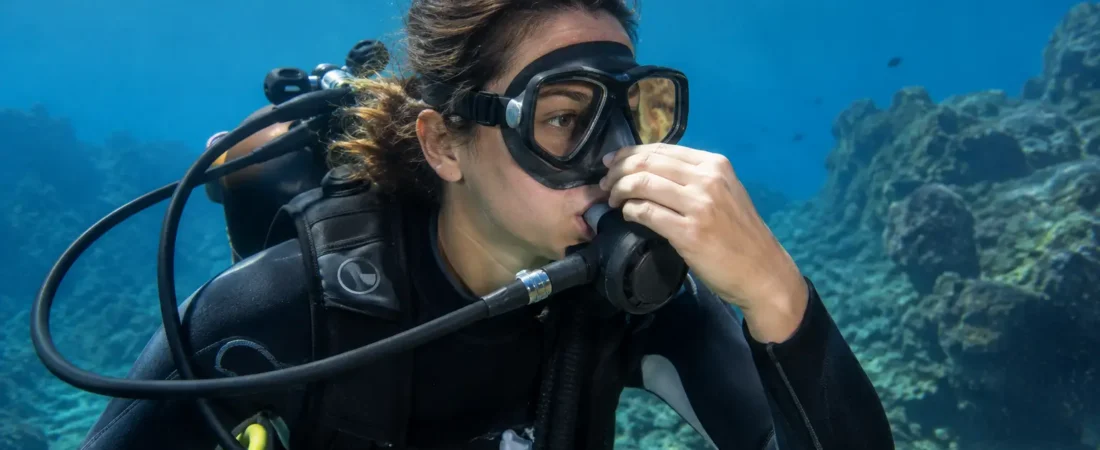
That first gentle descent can feel magical – until your ears begin to feel tight. Learning how to equalise underwater is one of the most useful skills for a comfortable dive, especially on a first experience. The reassuring part is that equalising is not about pushing through discomfort. It is about slowing down, using the right technique early, and letting your instructor adapt the pace to you.
What equalising underwater actually means
As you descend, the water pressure around you increases. Your outer ear is exposed to that pressure, while the air space behind your eardrum needs a little help to match it. Equalising simply means allowing a small amount of air into that middle-ear space through the Eustachian tubes.
When it works, you may notice a soft pop, click or release of pressure. It should feel gentle. Pain is not a sign that you need to try harder. It is your cue to stop descending and deal with the pressure before going any deeper.
Your mask also contains air, so it needs equalising too. This is straightforward: as you descend, breathe a tiny amount of air out through your nose into the mask. It prevents the mask from pressing uncomfortably against your face.
How to equalise underwater: start before you need to
The most common mistake is waiting until the ears hurt. By then, equalising can be more difficult. Begin at the surface, then equalise again after the first small movement down. Continue regularly throughout the descent, ideally before you feel any pressure at all.
Think of it as a calm rhythm rather than a task you perform once. Descend a little, equalise, check that you feel comfortable, then continue. On a private diving experience, there is no need to match anybody else’s speed. A good instructor will stay close, watch your comfort and pause whenever needed.
Keep your body relaxed and your head in a comfortable, upright position where possible. Looking sharply upwards can sometimes make equalising less effective. Small, unhurried movements are usually more successful than trying to descend quickly and solve the problem later.
The gentle Valsalva technique
The technique most beginners learn is simple. Pinch your nostrils closed through the soft part of your nose, close your mouth and blow very gently as if trying to exhale through your nose. The aim is not to force air. It is a light, controlled pressure that may create a small pop in one or both ears.
If nothing happens, do not blow harder. Stop your descent, return slightly shallower if necessary, relax for a moment and try again gently. Many people find it works better after swallowing or moving the jaw from side to side.
Other techniques that may help
Some divers equalise naturally by swallowing, yawning, wiggling the jaw or making a quiet humming sound. These movements can help open the Eustachian tubes without much effort. You may also hear experienced divers mention the Frenzel technique, which uses the tongue and throat rather than blowing from the chest. It can be useful, but it is not something you need to perfect before a beginner dive.
For most first-time divers, gentle Valsalva combined with regular swallowing and a slow descent is enough. What matters most is discovering which method feels natural for you, under the calm guidance of a certified instructor.
If your ears will not equalise, stop and go up slightly
Never continue down through pain. If one ear feels blocked, signal to your instructor, stop where you are and try to equalise again. Often, ascending just a small distance reduces the pressure enough for the ear to release. Once it feels comfortable, you can continue slowly.
If the ear still does not clear after a few calm attempts, the right decision may be to end the descent for that day. This is not a failure and it does not mean diving is not for you. Bodies can respond differently from one day to another, particularly after flying, poor sleep, dehydration or a minor cold.
A relaxed approach protects both your comfort and your confidence. Underwater, there is always time to pause. The best dives are not measured by depth, but by how settled and present you feel throughout the experience.
Why forcing an equalisation is never worth it
Trying too hard can irritate the ears and make the problem worse. Strong blowing may create discomfort, while descending with ear pain can lead to a pressure injury known as barotrauma. Symptoms can include lingering pain, fullness, reduced hearing or dizziness after the dive.
The sensible rule is simple: if it hurts, stop. Ascend a little, equalise gently and only continue when the pressure has fully eased. If you experience persistent pain, hearing changes, dizziness or discharge after diving, seek medical advice before entering the water again.
You should also avoid diving when you are congested, have an ear infection, or feel unable to clear your ears on land. Decongestant medicines are not a reliable shortcut, particularly if their effect could wear off during the dive. It is better to reschedule than to turn a holiday activity into an uncomfortable memory.
A few practical ways to make equalising easier
Preparation begins before you enter the sea. Drink water, take your time getting ready and mention any concern about your ears to your instructor. If you are feeling anxious, say so. Tension in the jaw, neck and breathing can make equalising feel more difficult than it needs to be.
Practise the motion gently on dry land before the briefing is over. You do not need to keep repeatedly forcing your ears to pop, but it helps to know where to place your fingers on the mask and how little pressure is required. This makes the underwater version feel familiar.
A well-fitting mask also matters. You need to be able to reach and pinch your nose easily through the nose pocket. During a personalised experience, your equipment should be adjusted carefully before the descent begins, not rushed once you are already in the water.
Finally, give yourself permission to go slowly. Tenerife’s clear volcanic waters are best enjoyed when you are comfortable enough to notice the colours, rock formations and movement around you. There is no prize for descending first.
Equalising on the way back up
On ascent, your ears usually equalise by themselves as expanding air leaves the middle ear. You should not normally need to pinch your nose and blow. Instead, ascend slowly, breathe continuously and stay close to your instructor.
Occasionally, a diver may feel pressure or discomfort during ascent. If that happens, signal straight away. Descending slightly can relieve the sensation before you continue up at an even slower pace. As with descent, discomfort should always be treated as useful information, never ignored.
What a calm, private introduction changes
For a first dive, equalising is often less about technique than environment. Clear explanations, equipment fitted with care and an instructor who remains beside you can transform an unfamiliar sensation into a manageable one. You can practise near the surface, pause whenever you need and only continue when you feel ready.
At Tenerife Scuba Diving, the aim is to make that first descent feel supported rather than pressured. Your instructor can demonstrate the signal for ear discomfort, remind you to equalise early and adjust the pace around your comfort. That personal attention is especially valuable for guests who have felt nervous about their ears, water depth or the idea of breathing underwater.
The goal is not to prove anything. It is to take one calm breath at a time, listen to your body and let the sea reveal itself at a pace that feels right for you.