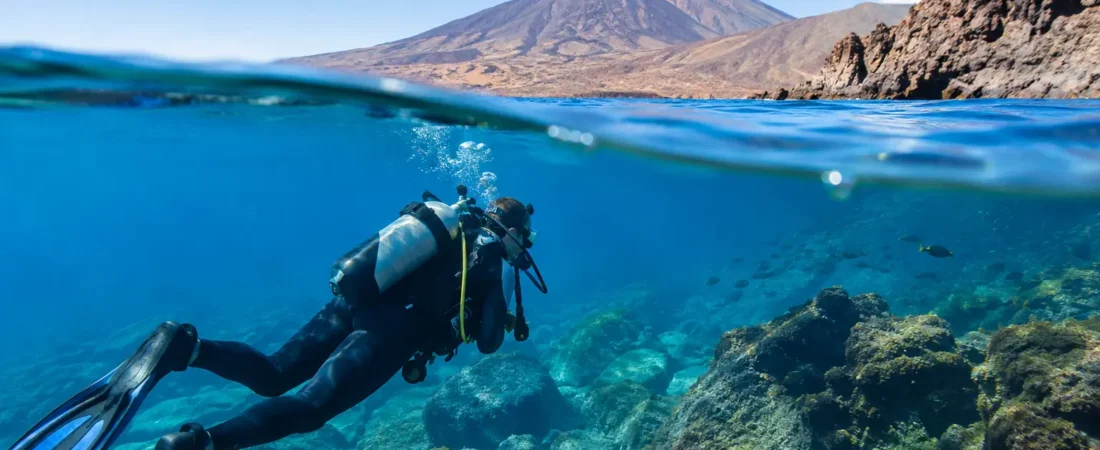
The Atlantic can look perfectly calm from the beach, then feel noticeably different once you reach the dive site. That is why a good Tenerife diving conditions guide should do more than quote average temperatures. It should help you understand what conditions mean for your comfort, safety and the type of experience that will suit you during your holiday.
Tenerife offers year-round diving, particularly around the south of the island, but the best choice of site always depends on the day. Wind direction, swell, visibility and your experience level all matter. For first-time divers, the priority is not finding the deepest or most dramatic site. It is entering the water calmly, with clear conditions and an instructor who can adapt the plan to you.
Water temperature in Tenerife
The sea around Tenerife stays relatively mild throughout the year. In winter, water temperatures are commonly around 18-20°C. By late summer and early autumn, they often reach 23-25°C. Spring and autumn sit between these ranges, although local weather and currents can create small variations.
Most divers are comfortable in a good-quality wetsuit, often around 5mm, but comfort is personal. Someone who feels the cold easily may appreciate an extra layer, especially on a longer dive or between January and April. A private instructor can take this into account when selecting equipment and planning the pace of the session.
Warm water is helpful, but it is not the only comfort factor. A well-fitted mask, appropriate weights and enough time to settle at the surface can make far more difference to a beginner than one or two degrees of water temperature.
Visibility: what can you realistically expect?
Tenerife is known for clear Atlantic water, and visibility is frequently very good. On many days, it can be in the region of 15-25 metres or more. However, visibility is never guaranteed. Recent swell, strong winds, rain runoff near shore and suspended sand can all reduce it.
For beginners, moderate visibility is still enough for an enjoyable first scuba experience. The instructor stays close, the dive remains shallow, and there is plenty to see in the immediate area: volcanic rock formations, fish moving through the reef and the changing textures of the seabed. Clear water is a bonus, not a requirement for a safe and memorable try dive.
Certified divers may prefer sites with greater depth or wider underwater landscapes when conditions allow. If visibility is reduced, an experienced guide can often choose a more sheltered location where the water is clearer and the entry is easier.
Wind, swell and currents in South Tenerife
The south of Tenerife is generally the island’s most reliable area for diving because it has several sheltered bays and accessible coastal sites. That said, no coast is sheltered from every wind direction. Trade winds can make some locations choppy, while swell from distant weather systems may affect particular shore entries even when the sun is shining.
This is where local judgement matters. A responsible diving instructor does not simply follow a fixed schedule. They check the sea, select an appropriate location and, if necessary, adjust the depth or postpone the activity. The best dive site is the one that matches the actual conditions and the people in the water that day.
Currents vary from site to site and can change with tides, swell and local topography. Many beginner-friendly dives in the Los Cristianos and wider South Tenerife area are chosen specifically for calm, manageable conditions. A first dive should not involve fighting a current or feeling rushed. Private guidance gives the instructor more freedom to choose an easy route and remain focused on you rather than managing a large group.
Is Tenerife suitable for beginner scuba diving?
Yes, Tenerife can be an excellent place to try scuba diving for the first time, provided the experience is properly supervised and conditions are suitable. The combination of mild water, volcanic scenery and accessible shore sites makes it possible to keep a first dive simple and unhurried.
A good beginner session begins before the sea. You should receive a clear explanation of the equipment, breathing, equalising your ears and the hand signals you will use underwater. There should be time to practise in shallow water before descending gradually. You do not need to prove anything or keep up with more experienced divers.
It is normal to feel excited, uncertain or slightly nervous before breathing underwater for the first time. The right instructor will expect that. They should give you time, stay close and stop if you are not comfortable. Some guests are ready to descend after a few minutes; others need longer. Both are completely fine.
Your medical history and current health matter too. A reputable operator will ask relevant questions before diving. If you have a medical condition, take regular medication, have had recent ear or chest problems, or are pregnant, ask for advice before booking rather than making assumptions on the day.
The best season depends on what matters to you
There is no single best month for everyone. Summer brings warmer water and often calmer-looking seas, making it popular with holidaymakers and families. It is also busier, so a private experience can be particularly valuable if you prefer a quieter, more personal session.
Winter offers pleasant diving temperatures compared with much of Europe, and it can be a very rewarding period for certified divers as well as beginners. You may want slightly more thermal protection, but the underwater experience remains enjoyable. Autumn is often a favourite for divers who want warmer water after the peak summer crowds have eased.
Marine life changes with the season and daily conditions, so it is better to arrive curious than with a checklist. You may see colourful reef fish, octopus, cuttlefish, rays or turtles, but wildlife is never a promise. The most reliable expectation is a guided look at Tenerife’s volcanic underwater environment, chosen responsibly for the conditions.
What conditions mean for certified divers
If you are already certified, Tenerife offers more than an easy holiday dip. The island has lava formations, rocky reefs, sandy areas, small caves and a range of depths. Your qualification, recent experience, air consumption and confidence level should shape the plan.
A guided dive is particularly useful if it is your first time on the island. Local knowledge helps with entry points, changing sea conditions and the parts of a site that are most interesting on that day. Tell your instructor honestly when you last dived and what sort of diving you enjoy. A relaxed 12-metre reef dive can be more satisfying than a deeper profile that does not suit your recent experience.
Private guiding also works well for couples or friends with different confidence levels. Rather than being placed into a mixed group with a fixed route, the dive can be paced around the people actually taking part.
How to prepare for your dive day
Bring swimwear, a towel, sunscreen for before and after the dive, and drinking water. Avoid alcohol beforehand, arrive rested where possible and leave enough time in your day so the activity does not feel rushed. If you wear contact lenses, tell your instructor, as this can affect mask advice.
Do not plan to fly after scuba diving without allowing the appropriate surface interval. Your instructor can explain the guidance that applies to your planned dive profile. It is sensible to schedule your diving earlier in your holiday where possible, especially if you have a flight home in the following day or two.
For a first dive, choose personal attention over a crowded timetable. A private experience allows more time for questions, a gentler introduction in the water and photographs that let you remember the day without needing to handle a camera yourself.
If you would like to discuss current conditions, a beginner try dive or guided diving in the south of Tenerife, you can contact Lov’Ocean directly before booking. A short conversation about your experience, dates and confidence in the water is often the easiest way to choose the right plan.
The sea does not need to be perfect for a good dive. It needs to be suitable for you, with a calm plan, reliable equipment and an instructor who is willing to put your comfort first.