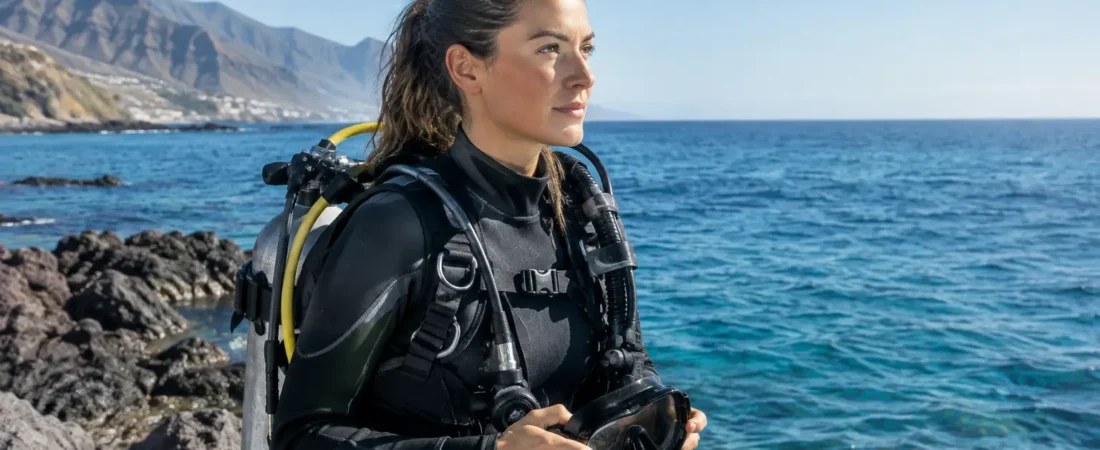
The sea off Tenerife can look wonderfully inviting from the shore, but the best first step is not choosing a fish to spot or a site to visit. It is understanding the Tenerife diving requirements that apply to you. They are straightforward for most guests, whether you have never worn a mask before or already hold a diving qualification, and they are designed to make the experience safe, calm and enjoyable.
For a private experience, the process should feel personal rather than complicated. Your instructor will ask the right questions, check that the day suits your comfort level, and explain everything clearly before you enter the water.
Tenerife diving requirements for complete beginners
You do not need a diving certificate to try scuba diving in Tenerife. A beginner session, often called a discovery dive or introductory dive, is specifically created for people with no previous experience. You will be accompanied closely by a certified instructor, receive a full briefing, and start in shallow, controlled conditions where you can get comfortable at your own pace.
The main requirement is that you feel reasonably comfortable in the water. You do not need to be a strong swimmer or an athlete, but you should be able to stay relaxed while wearing a mask and breathing from a regulator. Some guests are nervous about breathing underwater at first. That is completely normal. A patient instructor will give you time on the surface and in the shallows to practise before going any further.
Age limits can vary according to the training agency, insurance arrangements and the type of experience. As a general guide, children can often take part from around the age of 10, provided they meet the relevant conditions and have parental consent. For families travelling with younger children, it is always best to ask in advance rather than assume a particular activity will be suitable.
A basic health declaration is also required. This is not paperwork for paperwork’s sake. It helps the instructor understand whether scuba diving is appropriate for you on that day. If you answer yes to certain questions, such as a recent chest condition, ear surgery, significant heart issue, or a condition that affects consciousness, you may need approval from a doctor before diving.
Your health, comfort and safety matter most
Scuba diving is a gentle activity when it is planned properly, but it does place the body under pressure. Being honest about your health is one of the most useful things you can do before booking. Asthma, diabetes, high blood pressure, anxiety, regular medication and past ear problems do not automatically prevent someone from diving. The answer depends on the condition, how it is managed and, sometimes, medical advice.
If you have a cold, blocked nose, ear infection or sinus congestion, it is usually sensible to postpone. Equalising pressure in the ears should never be forced. A good diving day begins with being able to breathe comfortably and feeling well rested.
Pregnant guests should not scuba dive. Guests who have recently had surgery, been unwell, or who are returning to activity after a significant medical event should seek appropriate medical guidance before making plans.
You should also avoid alcohol before a dive and arrive hydrated. Tenerife’s sunshine is one of the pleasures of a holiday, yet a long afternoon in the heat can leave you tired or dehydrated without noticing. Drinking water, having a light meal and allowing enough time to prepare will make the experience more comfortable.
What the instructor will check
Before entering the water, your instructor will normally confirm your health declaration, explain the plan, fit your equipment and make sure you understand a few simple underwater signals. You will practise key skills in easy water first, including breathing from the regulator and clearing water from your mask.
This is not a test you have to pass under pressure. It is a chance to become familiar with the equipment while your instructor is right beside you. If you need more time, the pace should be adapted. If you decide that the experience does not feel right, it is always better to say so. Comfort and confidence are part of safe diving.
Requirements for certified divers in Tenerife
If you are already qualified, you will usually need to show proof of certification before joining a guided scuba dive. A digital certification card is generally accepted, though it is wise to keep a copy accessible on your phone before leaving your accommodation. Your instructor may also ask about your recent diving experience, total number of dives and the depth you are comfortable with.
These questions help shape the right plan. Someone who qualified recently and has not dived for two years may benefit from a gentle refresher before visiting a deeper volcanic site. A diver with recent experience may be ready for a more varied route, subject to conditions. Neither answer is better than the other. The aim is simply to match the dive to the person.
Bring your logbook if you use one, particularly if your qualification or recent experience needs clarification. If you hold an advanced qualification, enriched air certification or another speciality, have the relevant proof available where it is relevant to the planned dive.
You will also complete a health declaration and sign the standard liability documents. These are normal requirements, even for experienced divers. Honest answers allow the instructor to make sensible decisions about the day’s conditions, entry point and depth.
Equipment, clothing and practical preparation
For most guests, diving equipment is provided. This normally includes your wetsuit, mask, fins, buoyancy control device, regulator, weights and cylinder. Having equipment fitted correctly makes a real difference to comfort, particularly for first-time divers. Let your instructor know if you are between sizes, feel cold easily, wear contact lenses, or have any concern about the fit of your mask.
You only need to bring swimwear, a towel, drinking water and sun protection for before and after the dive. Avoid applying a heavy layer of sunscreen immediately around the eyes if you will be wearing a mask, as it can affect the seal. If you have long hair, bring something to tie it back comfortably.
The water temperature around Tenerife is pleasant for much of the year, but it is not identical in every season. A suitable wetsuit helps retain warmth, and your instructor will select equipment according to the conditions. If you feel cold during the briefing or in the water, say so early. Small adjustments can make a big difference.
Flying after diving
One requirement that is easy to overlook is planning around your flight home. You should not scuba dive immediately before flying because your body needs time to release absorbed nitrogen safely. As a cautious general rule, allow at least 12 hours after a single dive and 18 to 24 hours after multiple dives before flying. Your instructor can confirm the most suitable interval for your specific plan.
This often means booking your dive earlier in your holiday rather than for the final morning. It gives you more flexibility too: if sea conditions change, there is room to move the activity without creating unnecessary pressure.
Conditions can shape the day
Tenerife offers excellent year-round diving potential, with volcanic formations, clear Atlantic water and a wide choice of sheltered areas. Still, no responsible instructor should promise that every site will be suitable every day. Wind, swell, currents and visibility can change, sometimes quickly.
That flexibility is a strength, not a disappointment. Choosing a site according to the conditions and your experience helps create a relaxed, well-organised day. In south Tenerife, this can mean selecting the most appropriate location near Los Cristianos, Costa Adeje or the surrounding coast, rather than following a fixed plan regardless of the sea.
Marine life is always a possibility, never a guarantee. The lasting value of a dive often comes from the feeling of weightlessness, the volcanic landscape beneath you and the quiet focus of breathing underwater, as much as from any particular encounter.
A simple way to prepare
The easiest preparation is to book with accurate information. Mention whether you are a complete beginner or certified diver, share any health consideration early, tell the instructor your holiday dates and avoid scheduling a dive too close to a flight. From there, a private instructor can organise the experience around your needs, including the equipment, timing and a pace that feels reassuring.
At Tenerife Scuba Diving by Lov’Ocean, that personal preparation is part of the experience, not an extra. The goal is for you to arrive knowing what to expect, feel looked after in the water, and leave with photographs that bring the moment back long after your holiday.
If you are unsure whether you meet the Tenerife diving requirements, ask before you book rather than ruling yourself out. In many cases, a brief conversation is all it takes to turn uncertainty into a well-planned day by the sea.