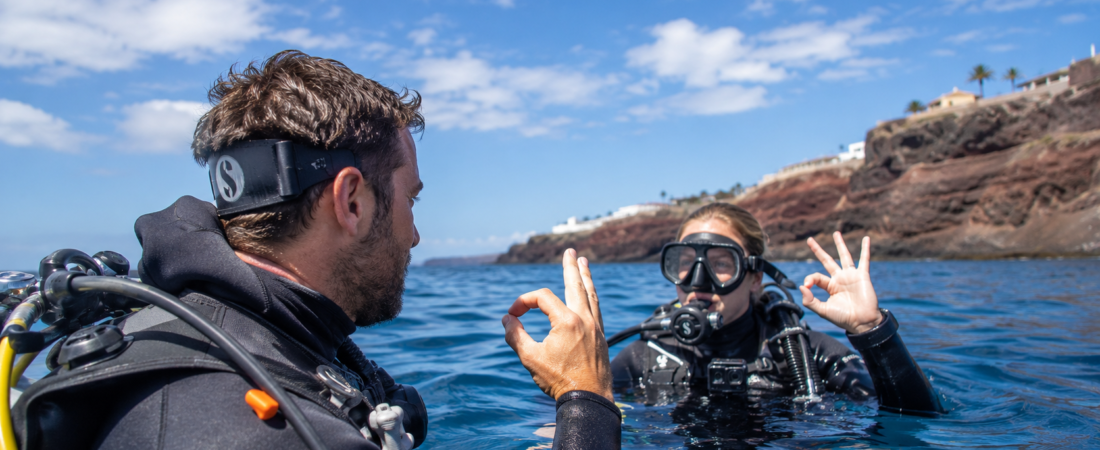
You are right to ask before booking. Is scuba diving in Tenerife safe? For most people, yes – when the dive is properly supervised, the site matches the diver’s level, and the conditions are respected. Tenerife is one of the most dependable places in Europe to try scuba diving, but safety never comes from the island alone. It comes from good decisions, calm guidance and an experience built around the person in the water.
That matters even more if this is your first dive. Many beginners are not worried about the sea itself so much as the unknown: breathing underwater, equalising, feeling relaxed, and wondering whether they will be rushed. A safe dive is not just about equipment checks. It is also about feeling understood, having time to adapt and being with an instructor who adjusts everything to your pace.
Why scuba diving in Tenerife is considered safe
Tenerife has several natural advantages. The climate is mild for much of the year, water temperatures are generally comfortable by European standards, and many dive sites are sheltered from heavy swell. That gives professionals more flexibility to choose calm entry points and suitable conditions, especially for beginners.
Visibility is often very good as well, which makes a real difference to confidence underwater. Clear water helps divers stay oriented, follow their instructor easily and enjoy the experience without feeling closed in. For someone doing a first dive, that can turn nerves into excitement quite quickly.
The island also has a long-established diving scene. That means access to trained professionals, known sites, standard safety procedures and a strong understanding of local sea conditions. Tenerife is not an adventure destination in the sense of being wild and unpredictable every day. It is a mature diving destination where good operators know exactly when to go, where to go and when to say not today.
Is scuba diving in Tenerife safe for beginners?
Yes, provided the experience is designed for beginners rather than adapted from a certified diver’s outing. That distinction matters. A true beginner needs more briefing, more reassurance and more one-to-one attention in the first few minutes than an experienced diver ever will.
The safest first dives are the ones that never feel hurried. Before entering the water, a good instructor explains the basics in plain language: how to breathe, how to communicate, what to do if your mask feels unusual, and how to equalise gently on descent. Once in the water, the pace should stay slow and comfortable. There is no prize for going deeper quickly.
This is where private or very small-group diving has a clear advantage. If one guest needs an extra few minutes on the surface, or wants to descend more gradually, the whole experience can adapt around them. In larger groups, people often feel pressure to keep up. That is not ideal for comfort, and comfort is closely linked to safety.
For non-swimmers or weak swimmers, the answer is more nuanced. Some people can still enjoy a supervised introductory dive in very controlled conditions, but it depends on confidence in the water, sea state and instructor judgement. The safest approach is always an honest conversation beforehand rather than making assumptions on the day.
What actually makes a dive safe?
People often focus on whether sharks, currents or depth are the danger. In reality, the biggest safety factors are usually more ordinary. The instructor’s judgement, the quality of the briefing, the suitability of the dive site and the pace of the experience matter far more than dramatic risks.
Good safety starts before anyone touches the water. Medical questions should be taken seriously. Equipment should be correctly fitted, checked and explained. The dive plan should be clear. A professional instructor will also watch how a guest responds during the briefing. If someone is anxious, they need reassurance and adaptation, not pressure.
In the water, safe diving looks calm. It means controlled descents, close supervision and constant awareness of the diver’s breathing, buoyancy and comfort level. It also means staying within simple limits. Beginners do not need challenging profiles or ambitious plans. They need an easy, enjoyable first experience that leaves them wanting more.
After the dive, safety continues with sensible surface intervals, hydration and clear guidance. A quality operator treats the whole experience as one continuous process, not just the underwater part.
The Tenerife-specific risks to understand
Tenerife is safe for diving, but no sea is risk-free. Conditions can change by area, and volcanic coastlines can create entries that are easy one day and less suitable the next. That is why local knowledge is so valuable.
Currents exist at some sites, especially those intended for certified divers. They are not a reason to avoid Tenerife. They are a reason to choose the right site for your level. Beginners should be taken to calm, protected areas with simple entries and exits. Certified divers, on the other hand, may enjoy more varied sites if conditions allow.
Boat traffic can also be a consideration in some coastal areas, which is why surface procedures and site choice matter. Marine life is rarely the issue people imagine. Tenerife’s underwater world is beautiful and fascinating, and serious incidents involving sea life are not what define diving safety here.
The more realistic risk for holidaymakers is overestimating their comfort level. Someone may say they are fine in the sea, then feel uneasy once the mask and regulator are on. That is not failure. It is normal, and it is exactly why personalised guidance makes such a difference.
How to choose a safe dive experience in Tenerife
If you are asking whether scuba diving in Tenerife is safe, the better question may be this: safe with whom? The operator you choose shapes the entire experience.
Look for clear communication before the activity, not just a booking form. You should know what is included, who the dive is for, and how the session is adapted for beginners or certified divers. Professionalism often shows in small details – thoughtful answers, honest expectations and no pressure to book something unsuitable.
Private instruction is especially valuable if you are new to diving, a little anxious, or travelling as a couple or family and want a more relaxed pace. One instructor focused on your experience can spot small issues early, explain things simply and adjust the dive around you. That is not only more comfortable. It is often safer.
Practical comfort helps too. Hotel pick-up, equipment included and a well-organised schedule reduce stress before the dive even starts. When guests are calm and looked after, they tend to listen better, breathe better and enjoy the water more naturally. Premium service and safety are not separate ideas. Very often, they support each other.
When diving might not be the right choice
A trustworthy instructor will not say yes to everyone. If sea conditions are poor, if a guest has a medical concern that needs clarification, or if someone is too uncomfortable on the day, postponing or adapting the plan may be the safest choice.
That can feel disappointing in the moment, especially on a short holiday. But it is also a sign of a serious professional. The right team cares more about giving you the right experience than forcing today’s experience.
The same applies after a flight. Divers need to follow proper timing rules around flying, and this should be explained clearly. Good operators do not leave guests to guess the practical details.
So, should you feel confident booking?
Yes – if you choose an experience that puts supervision, comfort and personal attention first. Tenerife offers excellent conditions for diving, especially for beginners and leisure divers who want calm water, clear visibility and memorable marine life without unnecessary intensity.
At Lov’Ocean, that is exactly how the experience is approached: private guidance, a pace adapted to you, equipment included, hotel pick-up and the reassurance of a certified instructor by your side throughout. For many guests, that is the difference between feeling nervous about trying scuba and feeling ready to enjoy it.
If you are curious but still slightly unsure, that is often a very good place to start. The safest first dive is not the one done with bravado. It is the one done with the right support, in the right conditions, and with enough care for you to relax and enjoy the moment.
Ready for Your Scuba Diving Experience in Tenerife?
Join us for a scuba experience in Tenerife with a certified instructor. Safe, personal, and unforgettable — perfect for beginners discovering their first dive and certified divers looking for unique volcanic reefs, crystal-clear waters, and amazing marine life.