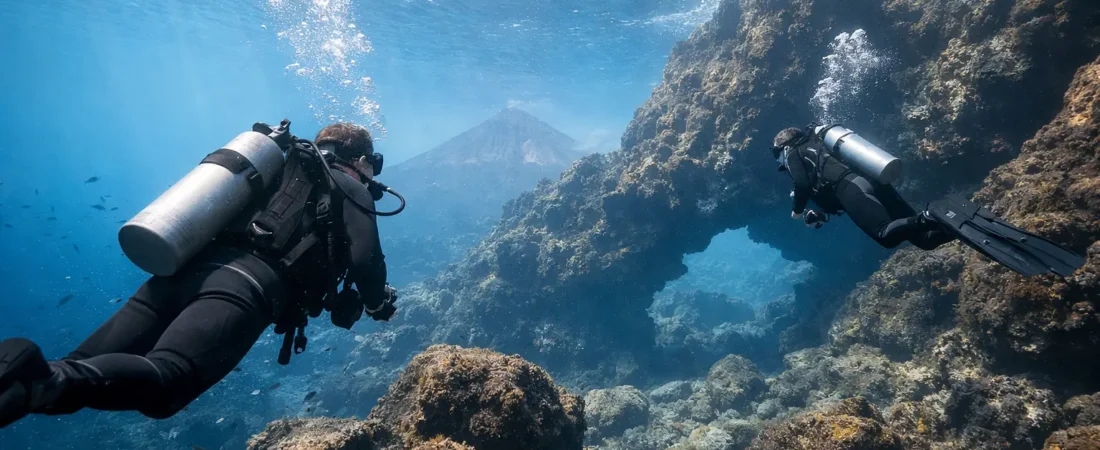
The first thing you notice during volcanic reef diving Tenerife is the shape of the seabed. Rather than a flat, uniform landscape, you move alongside dark lava shelves, natural arches, gullies and rocky slopes formed by the island’s volcanic history. Light catches the textures of the rock, small fish gather around the protected edges, and every few metres brings a different view.
For many holidaymakers, this is what makes diving in Tenerife feel so memorable. The underwater world is dramatic without needing to be intimidating. With a calm pace, clear guidance and a dive planned around your experience, volcanic reefs offer a beautiful introduction for first-time divers and a rewarding change of scenery for certified divers.
What makes Tenerife’s volcanic reefs different?
Tenerife is not defined by tropical coral reefs. Its underwater character comes from lava that cooled and settled into striking formations over time. These formations create structure: ledges where marine life can shelter, channels that guide your route, and open sections where the Atlantic blue seems to stretch away beyond the reef.
That structure is important because it gives each dive a natural rhythm. You may begin in a sheltered area where it is easy to settle your breathing, then follow the contour of the reef as your confidence grows. The experience is visual and immersive, but it can remain gentle and accessible when the site and conditions are chosen carefully.
The exact appearance changes with depth, sunlight, weather and the route selected on the day. Some dives feel bright and open. Others are more atmospheric, with lava rock creating shadow, contrast and a sense of quiet discovery. This variety is one reason certified divers often enjoy returning to Tenerife’s coastal sites.
Volcanic reef diving in Tenerife for beginners
You do not need previous diving experience to see a volcanic reef. A private introductory dive is designed to make your first time underwater feel simple, supported and unhurried. Before entering the sea, your instructor explains the equipment, hand signals and the few skills you need in clear, everyday language.
There is no need to memorise technical information or perform under pressure. You have time to get comfortable with breathing through the regulator in shallow water, practise at your own pace and ask questions whenever you need to. Once you are relaxed, the reef becomes the focus.
For a first dive, the most meaningful details are often small: the movement of fish around a rock, the change in colour as you descend a little deeper, or the moment you realise you are calmly breathing underwater. A volcanic setting adds a special sense of place. You are not simply trying scuba diving on holiday; you are seeing Tenerife from a perspective that few visitors experience.
Private guidance is especially valuable for nervous beginners, couples travelling together, or anyone who prefers personal attention. Your instructor can adapt the pace, depth and route to how you are feeling that day. Feeling comfortable is not separate from safety. It is part of it.
A rewarding route for certified divers
Certified divers can enjoy Tenerife’s reefs in a more exploratory way, with a guided route selected according to qualification, recent experience and sea conditions. The aim is not to chase a checklist of sightings. It is to make the most of the landscape, the visibility available and the small details that make a site interesting.
A knowledgeable guide helps you read the reef rather than simply pass over it. They can point out life tucked into crevices, choose a route with appealing lava formations and manage the dive so there is time to look, photograph and enjoy the surroundings. This is particularly useful if you are visiting Tenerife and do not know the local coastline.
Conditions in the Atlantic are never identical from one day to the next. Visibility, swell and currents can all influence the best choice of site. A thoughtful plan respects those variables instead of treating every dive as fixed. Sometimes the most comfortable site is also the most enjoyable one.
How a calm diving experience is planned
A good reef dive begins before you enter the water. The location should suit your level, the forecast and the day’s sea state. Equipment should fit properly and be prepared for you, so you can focus on the experience rather than the practical details. A clear briefing should tell you what will happen, where you are going and how your instructor will support you throughout.
At Tenerife Scuba Diving by Lov’Ocean, the experience is shaped around that personal preparation. Equipment is included, guidance is provided by a certified instructor, and underwater photos are included so you can stay present rather than worry about recording every moment yourself. Where it is appropriate to the booking, practical logistics can also be arranged to keep the day straightforward.
This approach matters because diving is more enjoyable when it feels organised without feeling rushed. For beginners, it creates space to build confidence. For certified divers, it allows more attention for the route, marine environment and pleasure of being underwater.
What you may see around the lava formations
Volcanic reef diving is as much about looking closely as looking far ahead. The rocks and crevices provide shelter for a changing mix of Atlantic marine life. You may notice shoals passing over the reef, colourful fish near the rock face, octopus hiding in a gap, or small invertebrates that are easy to miss at first glance.
Wildlife is never a promise, and that is part of what keeps each dive authentic. Sea conditions, season, water temperature and simple chance all play a role. The value of the dive does not depend on one particular encounter. The lava formations themselves offer a rich setting, while the living details reward a slower, more observant pace.
If photography matters to you, volcanic rock can also create beautiful contrast in underwater images. Dark contours, blue water and natural shafts of sunlight give photos a strong sense of Tenerife. A good instructor will know when to pause for a picture without interrupting the calm flow of the dive.
Choosing the right time and expectations
Tenerife can offer diving throughout the year, but the best experience is not only about choosing a month. It is about matching the plan to the conditions on the day. Winter and summer can both bring excellent opportunities, although water temperature, wind and surface conditions naturally vary.
If you are new to scuba diving, allow enough room in your holiday schedule to be relaxed. Avoid booking it on a day when you need to rush straight to another activity. If you are flying, follow the instructor’s guidance on the appropriate interval before your flight. These simple decisions make the experience more comfortable and safer.
Wear a swimsuit, bring a towel and arrive ready to take things at an easy pace. Everything else should be explained clearly. You do not need to be an athlete, and you do not need to be an expert swimmer to ask about an introductory dive. Honest information about your confidence in the water and any relevant health considerations helps your instructor tailor the experience responsibly.
A quieter way to remember Tenerife
From Los Cristianos and Costa Adeje to the quieter stretches of Tenerife South, the coast offers far more than a view from the beach. Beneath the surface, volcanic rock tells the island’s geological story in a direct, surprising way. It is close enough to reach easily, yet different enough to make the day feel like a genuine escape.
Whether it is your first breath underwater or one dive among many in your logbook, the best volcanic reef experience is one that leaves you feeling looked after, unhurried and fully present. Choose the conditions that suit you, let the reef set the pace, and give yourself the chance to see Tenerife in a deeper, calmer light.