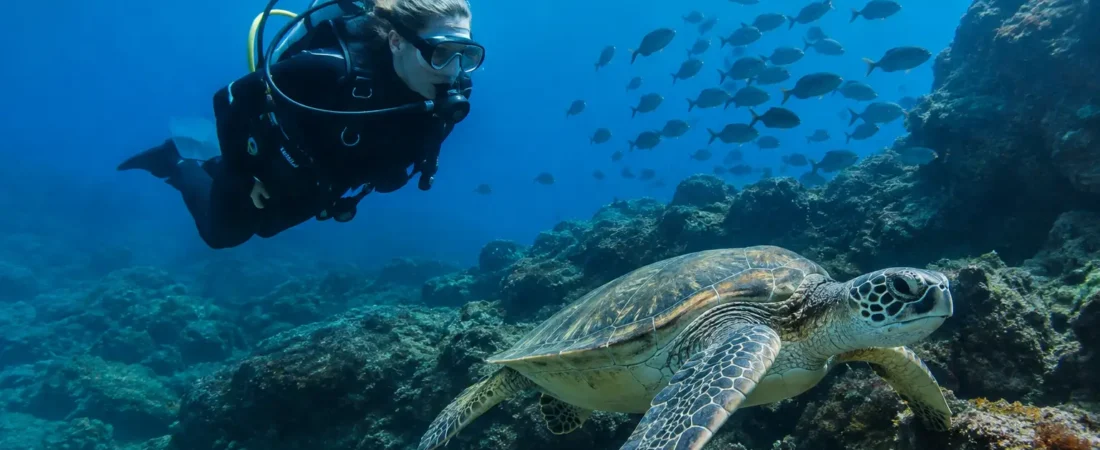
The Tenerife marine highlights begin where the island’s volcanic character continues underwater. A few metres below the surface, dark lava rock becomes a living landscape of ledges, arches, boulders and reef walls, softened by colour, movement and clear Atlantic light. For a first-time diver, it is an unexpectedly calm introduction to another world. For a certified diver, it is a coastline that rewards slow, attentive exploration.
What makes the experience special is not simply searching for one famous animal. It is the feeling of moving through a volcanic environment with time to notice the details: a shoal changing direction above a reef, a curious fish appearing from a crack in the rock, or sunlight falling across the sand. Marine life changes with the season, sea conditions and site, so every dive should be approached with curiosity rather than a fixed checklist.
Tenerife marine highlights start with volcanic scenery
Tenerife was shaped by volcanic activity, and its underwater terrain has a distinct personality. Rather than wide tropical coral gardens, many local dive sites offer sculpted lava formations, rocky slopes and natural shelters where marine life gathers. The contrast between black volcanic stone, blue water and flashes of colour makes even a gentle, shallow dive feel visually striking.
Around the south of the island, sites can often be selected according to the day’s conditions and the diver’s confidence. This matters more than chasing a single location. A well-chosen site can offer easier entry, comfortable depth and a relaxed route, allowing you to enjoy the landscape without feeling rushed.
For beginners, the most memorable moments are often simple ones: taking the first calm breaths underwater, realising you can move comfortably in the water, and seeing the seabed come alive around you. A private introduction gives you the space to settle in at your own pace before the underwater scenery takes centre stage.
Rock formations that create natural shelter
Volcanic reefs are full of small changes in texture and shape. Crevices, overhangs and sheltered corners offer protection for many species, while open sand channels create a different kind of scene. Your instructor or guide can point out what may be easy to miss at first glance, from well-camouflaged fish to small creatures tucked close to the rocks.
These formations also make the dive feel varied without needing to go deep or follow a demanding route. One minute you may be gliding over pale sand; the next, you are following a rocky edge where fish gather in the current. The route is adapted to your level, air consumption and comfort on the day.
The marine life is varied, never scripted
Tenerife’s Atlantic waters can offer encounters with colourful reef fish, schooling species and larger visitors moving through the blue. You may spot parrotfish grazing on the reef, trumpetfish hovering almost motionless, or octopus blending into the rocks. Stingrays and other rays are possible at certain sites and times, but no responsible guide should promise a particular sighting.
That uncertainty is part of the appeal. The sea is not a display, and the most meaningful encounters tend to happen when there is no pressure to force the moment. A calm approach, respectful distance and an experienced eye can make a brief sighting feel far more special.
The smaller details deserve attention too. Sea urchins tucked into volcanic hollows, patterned nudibranchs, cleaner fish and delicate anemones all add texture to the dive. An attentive guide helps turn these quiet discoveries into part of the experience, particularly for guests who are new to the underwater world.
Why a slower pace changes what you see
When divers feel comfortable, they notice more. There is time to look beyond the obvious, adjust buoyancy gently and let marine life behave naturally. Rushing from one point to another can make a beautiful site feel like a checklist. A personalised pace makes room for the moments that tend to stay with you.
This is particularly valuable on a first scuba experience. You do not need to arrive with technical knowledge or confidence in the sea. With a certified instructor beside you, clear explanations and equipment prepared for you, the focus can remain on breathing, relaxing and enjoying what is in front of you.
Light, visibility and the changing mood of a dive
The underwater view around Tenerife changes throughout the day. Morning light can feel soft and clear, while later dives may bring stronger contrasts across the rock. Visibility also varies with weather, swell and currents. These are normal parts of diving, not signs that something has gone wrong.
Good planning makes a genuine difference. An experienced local instructor considers sea conditions, the chosen site and your experience level before entering the water. Sometimes the best decision is to select a more sheltered location or keep the dive simple. Comfort and safety always create a better experience than trying to follow a rigid plan.
For certified divers, Tenerife’s changing conditions are one reason repeat dives remain interesting. The same volcanic area can feel completely different depending on the light, the season and the movement of the water. For newcomers, the island’s generally welcoming conditions can make it an excellent place to take that first step with proper individual support.
A private experience lets the highlights feel personal
The best Tenerife marine highlights are easier to appreciate when the experience is built around you. A private dive can be adapted to how you feel in the water, how much time you need for the briefing and what you hope to take away from the day. Some guests want a gentle first discovery; others want to return to diving after time away; certified divers may be looking for a carefully guided exploration of Tenerife’s volcanic sites.
At Lov’Ocean, the approach is intentionally personal and reassuring. Equipment is included, the briefing is clear, and the instructor remains focused on your comfort throughout the experience. When appropriate, practical arrangements can also be made easier, so your day feels straightforward from the moment you arrive.
Photos are another thoughtful part of the experience. They give you something real to share afterwards, whether it is your first underwater breath, a relaxed moment beside the reef or the colour of the Atlantic around you. More importantly, they allow you to stay present during the dive instead of worrying about documenting every second yourself.
How to make the most of your dive
Arrive with an open mind and avoid setting your heart on one particular animal. Wear comfortable swimwear, listen carefully during the briefing and mention any worries honestly, especially if it is your first time. Feeling nervous is common, and it does not mean scuba diving is not for you.
If you are travelling with a partner or family member, a private format can be especially helpful. Different people often need different amounts of time to feel at ease, and a personalised session can respect that without making anyone feel left behind. Certified divers should share their qualification level and recent diving experience in advance so the route can be planned appropriately.
The sea will decide some of the details, but you can choose the quality of the experience. Give yourself enough time, select a team that takes your comfort seriously, and let Tenerife’s volcanic underwater world reveal itself at a pace that feels right for you.