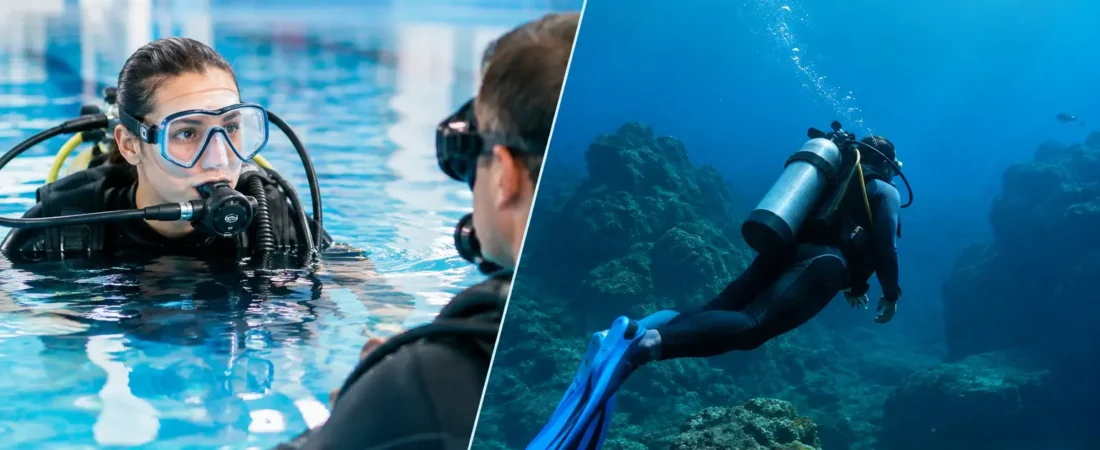
A swimming pool can make breathing underwater feel possible. The ocean makes it feel real. Pool versus ocean diving is not simply a question of where you get wet: it is the difference between learning the basic movements in a predictable space and experiencing the calm, moving world beneath the surface of Tenerife’s coast.
For a first-time diver, both have a purpose. A pool offers control and familiarity. The sea brings depth, natural light, volcanic scenery and the quiet excitement that makes a first dive memorable. The right choice depends less on courage than on how you would like to be introduced to scuba diving.
Pool versus ocean diving: the essential difference
A pool is designed to remove variables. The water is generally still, visibility is clear, the bottom is close, and there are no changing conditions to consider. This makes it a useful place to become familiar with the equipment, practise slow breathing and learn how to clear water from a mask. For someone who feels uncertain about putting their face underwater, that predictability can be very comforting.
Ocean diving asks you to apply the same simple skills in a natural environment. You may notice a gentle swell at the surface, changing light and a wider sense of space. Once underwater, however, many beginners are surprised by how peaceful it feels. Sound softens, movement slows, and your instructor can guide you at a pace that leaves room to look around rather than rush through a checklist.
Neither setting is automatically better. A pool is excellent for familiarisation; the sea is where scuba diving becomes an experience rather than a rehearsal. For many holidaymakers, a carefully supervised first dive in calm coastal conditions offers both: time to settle into the equipment and time to enjoy the underwater world.
What a pool is good for
Pool sessions are particularly helpful when the goal is confidence with the basics. You can stand up easily, repeat an exercise without distraction and become used to communicating with hand signals. There is no pressure to explore before you feel ready.
This can suit guests who are nervous swimmers, have not been in the water for some time, or simply prefer to take their first steps slowly. It is also common in longer diving courses, where practical skills are introduced in sheltered water before progressing further.
But a pool cannot fully recreate the sensations of open water. There is no natural current, no changing seabed, no fish passing by and no need to manage the gentle transition from shore to sea. These are not reasons to worry about ocean diving. They are simply why good guidance matters when it is time to move beyond the pool.
What the ocean adds to a first dive
The sea offers the part most people imagine when they book a scuba experience: floating above rock formations, seeing the colours and textures of a volcanic coastline from below, and discovering how calm a natural underwater environment can be.
Tenerife is particularly rewarding because its volcanic character continues beneath the water. Depending on the chosen site and conditions, divers may encounter rock ledges, lava formations, schools of fish and changing shades of blue. Marine life is never a promise, and it does not need to be. The setting itself creates a strong sense of discovery.
Ocean diving also gives you a more honest feel for what certified diving is like. You learn to move slowly, stay close to your guide, notice your breathing and remain aware of your surroundings. For some guests, this is exactly what makes the experience meaningful. It is not about performing perfectly. It is about feeling supported enough to be present.
Is ocean diving harder than pool diving?
It can feel more demanding at first, but it does not have to feel difficult. The difference is usually psychological rather than technical. In a pool, the edges are visible and familiar. In the sea, there is more space around you, which can feel exciting, humbling or both.
A thoughtful instructor makes that difference manageable. Before entering the water, you should understand the plan in clear, simple language. Equipment should be adjusted carefully, and there should be time to get comfortable at the surface before descending. Underwater, the pace should remain unhurried, with regular check-ins and the freedom to pause or turn back if something does not feel right.
The sea conditions matter too. A responsible diving experience is planned around the weather, visibility and comfort level of the guest. A calm, appropriate site can feel surprisingly gentle, especially when you are not trying to keep up with anyone else.
Why private guidance changes the experience
For beginners, personal attention is often more valuable than extra depth or distance. When your instructor is focused on you, they can notice small signs of tension early, explain a skill again in a different way, and adjust the rhythm to suit how you are feeling that day.
This is especially reassuring for couples, families and solo travellers who want an experience that feels organised without feeling impersonal. You have space to ask questions, take a few extra minutes with the mask or regulator, and enjoy the sea once you are comfortable.
At Tenerife Scuba Diving, a private introduction is designed around that balance. Equipment is included, guidance is individual, and underwater photos help preserve the moment without making the experience feel staged. The aim is simple: to make your first encounter with the ocean feel calm, safe and genuinely special.
Which option should you choose?
Choose a pool session if you want to focus entirely on basic water confidence, if you are preparing for a longer course, or if you feel you need a highly controlled first introduction. It is a sensible and useful starting point.
Choose an ocean experience if your goal is to discover scuba diving during your Tenerife holiday and you would like the memory to include the natural underwater landscape. With the right conditions and close instructor support, complete beginners can often enjoy the sea without needing a separate pool-only session first.
If you already hold a diving certification, pool versus ocean diving is a much simpler decision. A pool can be useful for refreshing skills after a long break, but it cannot replace a guided exploration of Tenerife’s volcanic dive sites. A local guide helps you settle back in, chooses a suitable location and allows you to enjoy the dive with greater ease.
A few concerns worth discussing before you book
You do not need to be an elite swimmer to try scuba diving, but you should be comfortable in water and willing to follow instructions. If you have a medical condition, recent illness, ear or sinus problems, or concerns about anxiety in the water, discuss them openly before confirming your experience. Clear information is part of good preparation, not an inconvenience.
It also helps to avoid setting a rigid expectation for the day. Conditions can change, and the best plan is the one that keeps the experience comfortable and safe. Being flexible about the exact site or timing often leads to a more relaxed dive.
The most memorable first dives rarely begin with confidence. They begin with curiosity, a little nervous anticipation, and an instructor who gives you the time to breathe slowly and look up at the water with a smile.