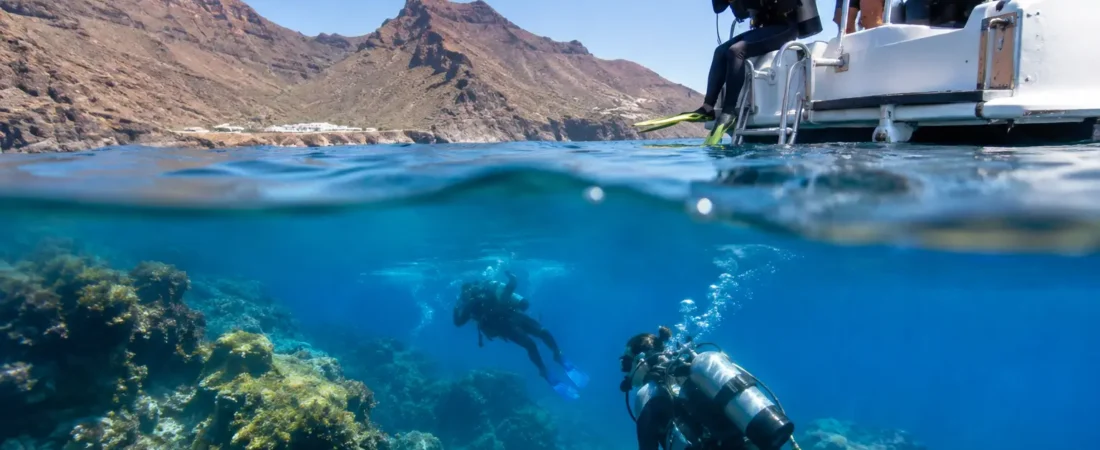
Tenerife rewards divers who leave a little room for the sea to set the pace. Knowing how to plan certified dives in Tenerife means more than choosing a date and packing a mask: it means matching your qualification, recent experience and holiday plans with the right conditions, site and guide. Done well, it feels simple from the first message to the moment you surface with your photographs and a quieter mind.
For certified divers, the island offers a distinctive underwater landscape shaped by volcanic rock, clear Atlantic water and changing coastal conditions. A thoughtfully organised experience lets you enjoy it without spending your holiday managing equipment, transport or unnecessary uncertainty.
Start with your certification and recent experience
Your certification card is the starting point, but it is not the whole story. Share your qualification level, the date of your last dive, approximate number of logged dives and the kind of diving you have enjoyed before. This gives your instructor or guide a clearer picture of the depth range, pace and site profile that will feel comfortable for you.
If you have not been underwater for a year or more, say so early. It does not mean you cannot dive. It simply allows time for an unhurried briefing, a refresher of the key skills and a gentle return to buoyancy control. Many divers find that a calm first descent restores confidence far more quickly than trying to rush back into familiar routines.
Bring your certification card in physical or digital form, along with your logbook if you keep one. You should also complete the required medical questionnaire honestly. Where a medical condition needs clarification, arranging this before your holiday avoids last-minute disappointment and keeps the decision where it belongs: with your safety and wellbeing.
Choose dates with flexibility, not pressure
Tenerife can be dived throughout the year, but sea conditions are never a fixed promise. Wind direction, swell and visibility influence which coastal area is most suitable on a given day. The best plan is usually to reserve your dive early in your stay, rather than on your final available day.
That small decision creates options. If conditions suggest a better day or a more sheltered site, there is room to adjust. It also means your diving does not have to compete with a departure flight, a long excursion or an evening reservation you do not want to rush.
Morning dives often suit holiday schedules well. The day begins calmly, the water is usually at its most peaceful before the coastline becomes busier, and you still have time afterwards to enjoy lunch, rest by the pool or explore the island. That said, the right timing depends on the day’s conditions and your own rhythm.
Plan around flying and your itinerary
Leave appropriate time between your final dive and flying. The precise interval depends on the number and profile of dives, so follow your instructor’s advice and the guidance of your training organisation. A sensible approach is to make diving one of the earlier highlights of your holiday, then keep the final day for land-based plans.
Also consider your energy levels. A demanding hike, a late night or a long drive immediately before diving can make it harder to relax and stay warm. Giving yourself a slower morning is not indulgent – it helps you arrive focused and ready to enjoy the experience.
How to plan certified dives in Tenerife by site
The right dive site is chosen on the day, not simply from a photograph. Tenerife’s volcanic coastline creates a rich variety of underwater environments, from rocky reefs and lava formations to sheltered bays with changing light, fish life and texture. Some sites suit an easy orientation dive; others are better when you feel settled and conditions allow.
A good guide will consider your certification, recent activity, comfort in the water and the day’s sea state before recommending a plan. This is particularly valuable if you are travelling with a partner whose experience differs from yours. A personalised schedule can keep the dive enjoyable for both people without turning it into a compromise nobody really wants.
In Tenerife South, locations around Los Cristianos, Palm-Mar, Costa Adeje and La Caleta can offer very different conditions depending on the wind and swell. Rather than arriving with one fixed site in mind, choose an operator who can explain the options clearly and select the most appropriate setting for that day.
Marine life is part of the pleasure, but it should never be treated as a guarantee. The Atlantic has its own rhythm. What makes a memorable dive may be a shoal moving through blue water, the detail of a lava wall, the clarity of the light or simply the relaxed feeling of being properly looked after underwater.
Decide what support will make the day easier
Travelling with all your own equipment gives you familiarity, but it can add weight and practical hassle to a holiday. Using well-maintained equipment provided for your dive can make the day much simpler, particularly if you are only diving once or twice during your stay.
If you do bring your own mask, computer or fins, mention this when booking. Your guide can make sure the rest of your kit is prepared in the right sizes and configuration. A properly fitted wetsuit matters more than many divers expect, especially if you are sensitive to feeling cold. Comfort supports calm breathing, concentration and enjoyment.
Private guiding is also worth considering when you value a pace that is genuinely your own. It gives you more time to settle, ask questions and focus on the details that matter to you, whether that is photography, buoyancy, a return after time away or simply a peaceful guided dive with your travel companion.
With Tenerife Scuba Diving by Lov’Ocean, certified divers can expect an experience organised around this kind of individual attention, with equipment and underwater photographs included. The aim is not to fill the day with unnecessary complexity. It is to make the logistics feel handled, so your attention stays on the water.
Ask the right questions before booking
A few clear questions can make your booking feel far more reassuring. Confirm what is included, how long to allow for the full experience, whether transport can be arranged from your area, and what you should bring beyond swimwear, certification and a towel. Ask how the site is selected if conditions change, and whether the plan can be adapted to your recent diving experience.
You may also want to ask about the maximum depth anticipated, the expected water temperature and whether a computer is provided if you are not travelling with one. These are not fussy questions. They help create the shared expectations that make a premium, personal experience feel relaxed from the outset.
Be equally clear about anything that may affect your comfort: ear equalisation concerns, anxiety after a long break, a preference for a slower descent or any relevant medical history. An experienced instructor will welcome the information and respond without judgement.
Prepare simply the evening before
There is no need to overthink your preparation. Drink water, sleep well where possible and avoid arriving dehydrated after a day in the sun. Keep alcohol light the night before, eat a normal breakfast and bring sun protection for the time before and after the water.
Most of all, arrive with enough time to settle. The best certified dives rarely begin with rushing from a taxi, searching for paperwork or trying to remember where you put your certification card. A few calm minutes for fitting equipment and listening to the briefing set a completely different tone for the dive.
Tenerife’s underwater world is at its best when you meet it with curiosity rather than a checklist. Plan with care, leave room for the conditions, and choose guidance that makes you feel safe, comfortable and free to enjoy every moment below the surface.