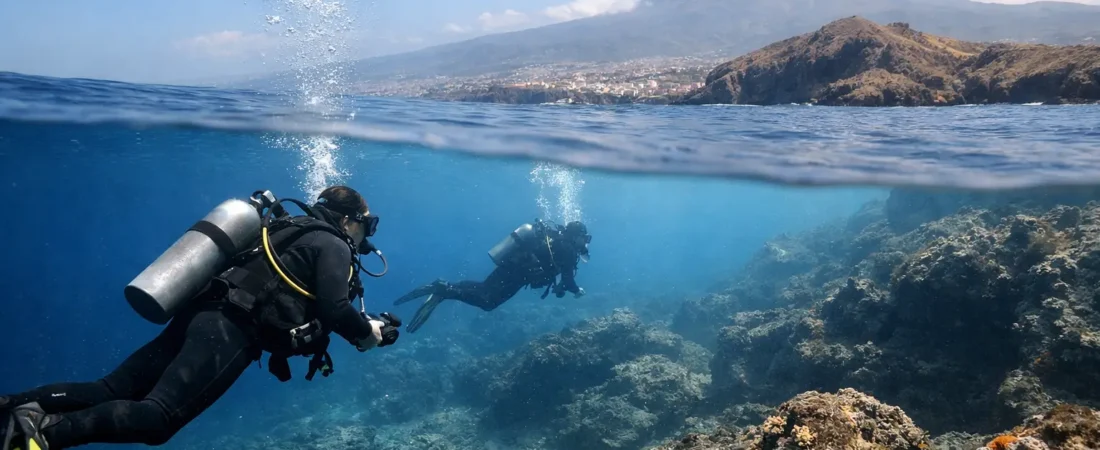
The sea off Tenerife can look inviting in every month of the year, but guests still rightly ask: when is the best season for diving Tenerife? The reassuring answer is that there is no single short window. Tenerife offers year-round diving, with each season bringing a different balance of water temperature, surface conditions, visibility and holiday atmosphere.
For a first private dive, the best date is often the one that lets you feel relaxed and unhurried. For certified divers, it may be the season that suits your preferred water temperature and the kind of marine encounters you hope to enjoy. A certified instructor can then select an appropriate site on the day, according to conditions and experience level.
The best season for diving in Tenerife depends on you
Tenerife sits in the Atlantic, close enough to benefit from a mild subtropical climate yet exposed to the changing character of the ocean. That is part of its appeal. The island does not have a traditional closed diving season, and the south coast is often particularly comfortable for getting into the water throughout the year.
If warmth is your priority, late summer and early autumn are usually the most appealing months. If you prefer cooler water, quieter beaches and a different seasonal feel beneath the surface, winter and spring can be equally rewarding. Visibility can be excellent at any time, but it is never something a responsible guide should promise in advance. Wind, swell and recent weather always have the final say.
The most useful way to choose is not to search for a perfect month, but to match the season to your comfort level, holiday plans and diving experience.
Summer: warm water and easy holiday planning
From roughly June to September, Tenerife’s sea gradually becomes warmer. Water temperatures commonly sit around 22°C to 25°C by late summer, making this a particularly pleasant period for people trying scuba diving for the first time. Entering the water feels less of a hurdle, and the longer, brighter days fit naturally around a relaxed holiday schedule.
Summer is a strong choice for couples, families and travellers who would like their first dive to feel simple and comfortable. With a private experience, there is time to settle in, practise the essentials at your own pace and enjoy the volcanic coastline without feeling rushed.
The trade-off is that summer is a popular time to visit Tenerife. Booking ahead is sensible if you have a specific day in mind, especially when you want a personalised itinerary or need transport from your accommodation in the south of the island. Early sessions are often a lovely option: the day is fresh, the light is soft and the rest of your holiday remains open.
Late summer and early autumn: the warm-water favourite
September and October are often considered a sweet spot. The sea has retained the summer’s warmth, while the most intense summer holiday period begins to ease. Water temperatures can remain very comfortable, and the weather is generally inviting for a day spent on and in the sea.
For many beginners, this is the easiest answer to the question of when to dive in Tenerife. It combines the practical comfort of warm water with the calm, unhurried mood that makes a first underwater experience more enjoyable. Certified divers also appreciate this period for longer, comfortable dives on Tenerife’s lava-formed reefs and rocky coastal sites.
Autumn: warm water with a quieter rhythm
From October into November, the water often stays warmer than visitors expect. It can be an excellent season for travellers who prefer to avoid the height of the summer rush but still want the pleasure of a warm sea.
Autumn weather does change from day to day, as it does in every Atlantic destination. A flexible approach helps. Rather than treating a dive date as fixed at all costs, it is better to allow your instructor to choose the most suitable time and location for the conditions. This is especially valuable for new divers, for whom calm entry and exit points can make a real difference to confidence.
Marine life changes with the seasons, but the ocean is not a timetable. Tenerife’s volcanic underwater landscapes remain compelling all year: natural rock formations, sandy patches, shoals of fish and the quiet sense of space that surprises many first-time divers. Any wildlife sighting is a privilege, not a promise.
Winter: mild air, cooler water and clear perspective
Winter in Tenerife is far gentler than winter in Britain. From December to February, daytime weather in the south is often comfortably mild, which makes the island a welcome escape for a winter holiday. The water is cooler, generally around 19°C to 21°C, but appropriate equipment keeps dives comfortable.
This season can suit certified divers who are accustomed to cooler conditions, as well as beginners who value attentive support and do not mind a slightly fresher entry into the sea. It is also a good time for visitors who want to build a few relaxed holiday days around diving, rather than travel during the busier summer period.
Winter does bring more potential for wind and swell. That does not mean diving is unavailable. It means the day’s plan needs to be chosen thoughtfully. Tenerife has a variety of coastal areas, and a local instructor’s knowledge of conditions is far more useful than a forecast viewed several days earlier. Safety, comfort and suitability should always guide the decision.
Spring: a calm choice for learning and exploring
March to May brings longer days, warming air and a gradual rise in sea temperature. The water may still feel fresh in early spring, then becomes more inviting towards May. For many guests, spring offers a pleasing balance: a quieter holiday atmosphere than high summer, pleasant conditions above water and dependable opportunities to explore the coast.
It is a particularly good period to learn. A private course or introductory session gives you room to ask questions, repeat skills when needed and progress without pressure. The goal is not simply to get underwater quickly. It is to feel safe enough to notice the extraordinary details around you: the texture of volcanic rock, shafts of sunlight and the gentle movement of fish through the blue.
For qualified divers, spring can be a wonderful time to return to the sea after winter. A guided dive can be tailored around certification level, recent experience and how you feel on the day.
What matters more than the month
The best diving day is shaped by more than a calendar. Your recent experience, confidence in the water, sensitivity to cold and the conditions at a chosen site all matter. Someone taking their first breath underwater may enjoy an August morning most. Another guest may prefer a peaceful January session, when the air is mild and the itinerary can move at a gentler pace.
A high-quality experience starts before the wetsuit goes on. You should know what the session involves, have equipment selected to fit properly and feel able to share any concerns. For beginners, a clear briefing and individual attention can transform nervous anticipation into genuine excitement. For certified divers, good guiding means choosing a site that is appropriate rather than chasing a fixed plan regardless of the sea.
At Tenerife Scuba Diving by Lov’Ocean, dives are organised around those details. Equipment is included, the pace is personalised, and underwater photos help preserve the experience without asking you to think about cameras while you are learning or exploring.
How to choose your dates with confidence
If warmest water is your main consideration, aim for August through October. If you prefer a milder, less busy holiday period, spring and autumn are excellent choices. If Tenerife is your winter escape, do not rule diving out: just be ready for cooler water and let local conditions shape the plan.
Where possible, schedule your dive earlier in your stay rather than on your final day. This gives more flexibility if weather conditions require a change, and it leaves space to book another underwater experience if you find that one dive is not enough. If you are flying after scuba diving, always allow the appropriate surface interval before your flight, following your instructor’s advice.
Whatever month brings you to Tenerife, the most memorable dive is rarely the one chosen by a chart alone. It is the one planned around the sea that day, with enough time, care and guidance for you to feel fully present beneath the surface.