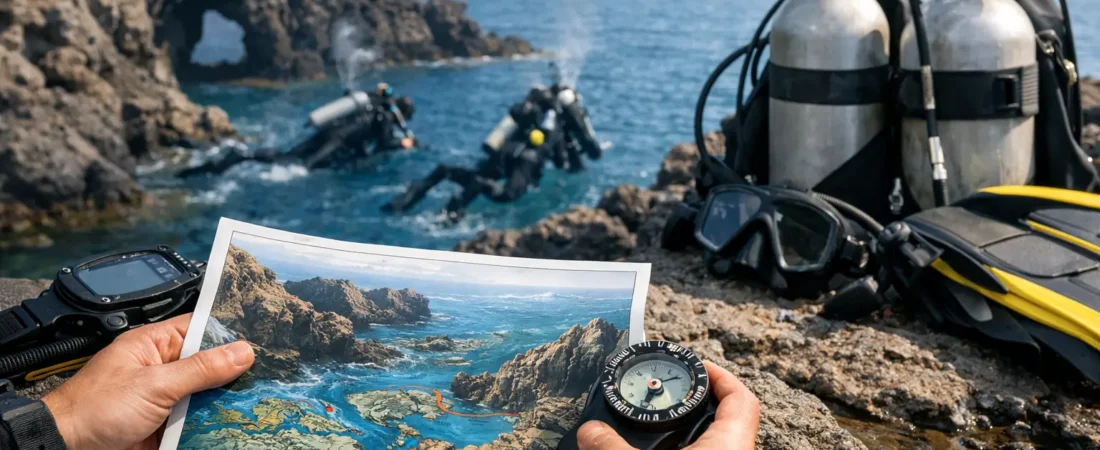
A Tenerife volcanic dive is not simply a matter of choosing a date and stepping into the sea. The island’s underwater landscape has been shaped by lava flows, natural arches, rocky shelves and dark sand, and each site feels different according to the sea conditions. Good volcanic dive planning turns that variety into a calm, well-paced experience, whether it is your first time breathing underwater or you already hold a diving certification.
For most guests, the best plan is also the simplest one: share your experience level, your holiday schedule and any concerns in advance, then let a qualified instructor select the right approach for the day. This leaves you free to focus on the moment itself – the first view of volcanic rock below the surface, the quiet movement of the water and the pleasure of exploring at your own pace.
Why Tenerife’s volcanic seabed needs thoughtful planning
Tenerife’s geology creates underwater scenery with real character. Instead of a uniform sandy seabed, you may encounter lava formations, ledges, boulders and passages where marine life finds shelter. Light can change quickly across dark rock, while the shape of the coastline can make one area feel very different from another.
That is precisely why choosing a site should never be based on a photograph alone. A beautiful volcanic formation is only enjoyable when the entry, visibility, current and surface conditions suit the diver. The right site for a relaxed first experience may not be the same site chosen for a certified diver looking for a longer guided exploration.
In Tenerife South, conditions can also vary between nearby coastal areas. A local instructor considers the direction of the swell, wind, recent weather and the comfort level of each guest before confirming the most suitable location. This thoughtful decision-making is not about making a dive feel complicated. It is what makes it feel effortless once you arrive.
Volcanic dive planning starts with your experience
First-time divers: comfort comes before depth
If you have never dived before, no previous qualification is needed for a private introductory experience. What matters is time. Before entering the water, your instructor should explain the equipment in clear language, show you how to breathe comfortably and give you space to practise the essential skills in shallow water.
Volcanic scenery is still very much part of the experience, but there is no need to rush towards the most dramatic-looking formation. A gentle, well-chosen route can reveal rock textures, small crevices and the colours of the seabed while allowing you to stay relaxed. The aim is not to prove anything. It is to feel secure enough to enjoy the sensation of being underwater.
Private guidance is especially valuable here. The pace can be adjusted if you need an extra moment at the surface, more time to equalise, or simply a pause to take in what you are seeing. Equipment is provided and fitted for you, so you can arrive without the stress of organising specialist kit for a single holiday activity.
Certified divers: match the route to your interests
For certified divers, planning begins with an honest conversation about recent diving, certification level, comfort in the water and the type of scenery you enjoy. Some divers prefer a slow, observational route around volcanic contours. Others may be more interested in the changing shapes of the rock, natural openings and areas where the terrain creates a stronger sense of relief.
A guided dive should remain responsive to the conditions on the day. If visibility is softer than expected, a route with close volcanic detail can be more rewarding than a wide open area. If the sea is particularly calm, the instructor may select a site that allows a little more exploration. Flexibility is a mark of good planning, not a compromise.
What to check before confirming your dive
A premium diving experience should feel well organised long before you enter the water. When arranging your dive, it helps to confirm a few practical details in advance. This avoids uncertainty on the day and gives your instructor the information needed to personalise the outing.
- Your diving experience, certification and approximate date of your last dive, if applicable.
- Any medical condition, medication, injury or concern that could affect participation.
- Your preferred date and time, leaving room for weather-based adjustments when possible.
- Whether you would appreciate help with local logistics, particularly if you are staying in Los Cristianos, Costa Adeje or nearby.
- What you would like to remember from the experience, including underwater photographs.
Medical suitability deserves particular care. Diving places the body under different pressure from normal daily activity, so conditions affecting the ears, sinuses, lungs, heart or circulation should be discussed openly before booking. A responsible instructor will advise when further medical clearance may be appropriate. This is a sensible part of preparing, not a reason to worry.
It is also wise to schedule diving early enough in your holiday that there is flexibility if sea conditions call for a change. And if you are flying after your dive, allow the recommended surface interval before boarding. Your instructor can confirm the appropriate timing for your planned activity.
How conditions shape the best volcanic dive
Weather apps are useful, but they do not tell the full story of a coastal dive site. Wind direction, swell period, tides and local shelter all influence how the water feels. A forecast that looks fine from a hotel terrace may still produce an uncomfortable entry at one point on the coast, while another location remains calm and inviting.
Visibility is equally variable. Clear water can make the volcanic landscape feel expansive, but a rewarding dive does not depend on seeing a long distance. On days with more particles in the water, the details close by become more atmospheric: the grain of old lava, the contrast between dark rock and marine colour, and the small movements within sheltered spaces.
The sea always has the final say. If conditions are not right for a particular plan, changing the site, adjusting the time or rescheduling is the right decision. A professional experience is defined by sound judgement, not by forcing an itinerary to happen exactly as first imagined.
Prepare lightly, arrive calmly
You do not need to pack like a technical diver for a well-organised volcanic dive. Bring swimwear, a towel, sun protection for before and after the activity, and drinking water. If you wear contact lenses or use prescription glasses, mention it when booking so that practical options can be discussed.
Arrive having eaten a light meal rather than on an empty stomach or immediately after a heavy lunch. Avoid alcohol beforehand, and tell your instructor if you feel unwell, congested or unusually tired. These small choices make a genuine difference to comfort in the water.
Most importantly, do not feel you need to memorise every instruction in advance. A calm briefing should cover what you need, when you need it. You will be shown how the equipment works, how to communicate underwater and what the route will involve. Questions are welcome at every stage.
Choose the experience, not just the site
It is easy to focus on the name of a dive site when planning a holiday, yet the quality of the guidance often matters more than the location itself. The same volcanic seabed can feel entirely different depending on the pace, the briefing and whether you feel properly looked after from start to finish.
At Lov’Ocean, the emphasis is on personal attention: a certified instructor, equipment included, clear organisation and underwater photographs to help you keep the memory. For beginners, that means reassurance without pressure. For certified divers, it means a guided route shaped around both conditions and your interests.
A volcanic dive is at its best when it leaves you with more than photographs of Tenerife’s dramatic seabed. It should leave you with the quiet confidence of having experienced it safely, comfortably and in a way that felt made for you.