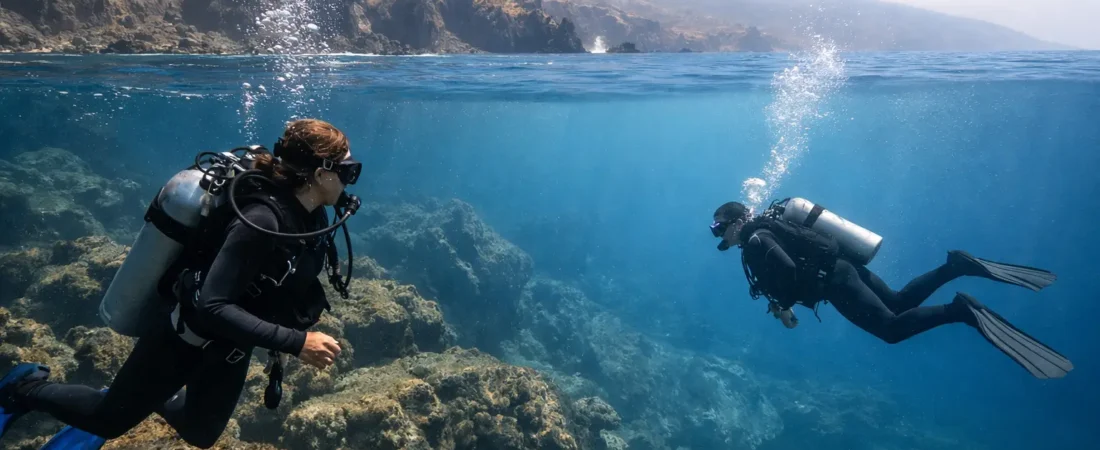
The moment before entering the water can feel very different from the photos. You may be excited, curious and slightly nervous, especially if it is your first time breathing underwater. Good diving safety is what turns that moment into a calm, memorable experience. It is not about making diving feel complicated. It is about having the right person beside you, the right conditions for your level and enough time to feel comfortable at every stage.
For a first dive in Tenerife or a guided dive as a certified diver, safety begins well before the sea. It starts with an honest conversation, careful preparation and an experience that respects your pace.
Diving safety starts with the right plan
A safe dive is never based on a fixed script. Conditions can change, and people arrive with different levels of confidence, fitness and recent experience. The best plan is one adapted to the person in front of the instructor.
Before the activity, you should be asked clear questions about your health, swimming confidence, previous diving experience and any concerns you may have. This is not paperwork for its own sake. It helps the instructor decide whether diving is appropriate, how the session should be organised and which site or depth is most suitable.
For beginners, the goal is simple: learn the essential skills slowly, in shallow and manageable conditions, before enjoying the underwater scenery. There is no benefit in rushing. A private introduction allows time to settle your breathing, adjust your mask and become familiar with the feeling of weightlessness.
For certified divers, a good plan considers certification level, the date of the last dive, comfort in the water and the day’s sea conditions. Tenerife offers striking volcanic landscapes, but the most rewarding route is not always the deepest or most ambitious one. A well-chosen, relaxed dive often leaves more space to notice the details around you.
Your instructor should make things feel clear
The sea deserves respect, but it should not feel intimidating. A certified instructor’s role is to make each step understandable and to remain fully attentive to how you are feeling.
Before entering the water, expect a briefing in plain language. You should understand how to use your equipment, how to communicate underwater, what the route will be and what to do if something does not feel right. Ask questions freely. A thoughtful instructor welcomes them, whether you are wondering how to clear a mask or simply feeling uneasy about breathing through a regulator.
For a first-time diver, the first few minutes in the water matter enormously. You should have time to practise the basics close to the surface or in shallow water, without pressure. Once your breathing becomes steady and you realise you can pause whenever needed, confidence tends to grow naturally.
Underwater, communication remains simple and constant. Hand signals, eye contact and a calm presence allow an instructor to check that you are comfortable throughout the dive. If you need to stop, slow down or return to shallower water, that is always the right decision. Diving is an experience to enjoy, not something to push through.
Comfort is part of safe decision-making
People sometimes assume safety is only about rules and equipment. In reality, comfort is one of its strongest foundations. A mask that fits well, fins that do not rub and a wetsuit suited to the water temperature help you focus on the experience rather than small distractions.
Equipment should be checked before every dive and adjusted to you, not handed over as a standard set. This includes the buoyancy device, regulator, weights and mask. A few extra minutes on land can make a significant difference once you are in the sea.
Good preparation also means leaving enough time. There should be no need to hurry from arrival to water entry. When transport, equipment and practical details are organised smoothly, you can focus on listening, breathing and enjoying the anticipation.
Conditions matter more than the calendar
Tenerife is known for its mild climate, yet the ocean has its own rhythm. Wind, swell, currents and visibility can vary between locations and from one day to the next. This is why an experienced local professional assesses conditions rather than relying on a plan made days earlier.
Sometimes the best choice is a sheltered site with an easy entry. On another day, clear and calm conditions may suit a different route. Flexibility is not a compromise in safety. It is a sign that the experience is being shaped around the real conditions, rather than forcing the sea to fit a schedule.
You can help by being open about how you feel. If you slept poorly, feel unwell, have a cold, are dehydrated or are more anxious than expected, say so before the dive. Congestion can affect comfort when equalising pressure in the ears, while fatigue and dehydration can make an otherwise easy activity feel harder. An instructor can then advise the sensible next step.
Alcohol and diving are not a good combination. Save celebratory drinks for later, drink water during the day and arrive having eaten something light and nourishing. You do not need to prepare like an athlete, but you should feel rested and ready to pay attention.
Safe habits underwater are simple habits
Once below the surface, calm breathing is the central habit. Breathe continuously and naturally through the regulator. Never hold your breath. Move slowly, stay close enough to your guide and keep checking in with your own comfort.
Buoyancy takes practice, particularly for newer divers. It is normal to need help finding a relaxed, balanced position in the water. Rather than trying to control everything with your hands or fins, give yourself time to breathe, settle and follow the instructor’s guidance. Slow movements also protect the marine environment and make it easier to appreciate the volcanic rock formations and changing colours of the reef.
Respecting the plan is equally simple. Stay within the agreed depth and time, keep an eye on the group or buddy, and begin the ascent when instructed. A slow ascent and a safety stop where appropriate are routine parts of responsible diving. They are not a sign that something has gone wrong.
If you see marine life, enjoy the encounter from a respectful distance. The best moments often happen when divers remain quiet and unhurried. There is no need to touch, chase or crowd an animal for a photograph. The experience is more beautiful when the sea is allowed to behave naturally.
After the dive, give your body time
The end of a dive is not the end of good judgement. Drink water, warm up if needed and take a few moments to talk through the experience. For beginners, this is often when the initial nerves give way to pride. For experienced divers, it is a useful chance to discuss the route, conditions and anything you would like to refine on a future dive.
Your instructor should also give clear advice about the rest of your day. Flying after diving requires a sensible interval, which depends on the type and number of dives completed. Follow the guidance given for your specific profile, and plan your diving well before your departure from Tenerife. Avoid strenuous activity immediately afterwards and allow your body a relaxed finish to the day.
Choosing a reassuring diving experience
When deciding who to dive with, look beyond the destination photos. Look for a service that explains what will happen, answers practical questions clearly and treats your comfort as a priority from the first message.
A private, personalised experience can be particularly valuable if you are a complete beginner, returning to diving after a long break or travelling with a partner who has a different confidence level. It gives the instructor room to adapt the pace, repeat skills when needed and focus on the details that help you feel at ease.
At Lov’Ocean, the intention is to make every guest feel looked after from preparation to the final photograph. Equipment is included, guidance is personal and the experience is built around enjoying Tenerife’s underwater world with calm confidence.
The sea does not ask you to be fearless. It simply asks you to listen, breathe steadily and choose people who will guide you with care. When those elements are in place, your first breath underwater can become the beginning of a lasting connection with the ocean.