The right diving course should leave you feeling looked after before you ever enter the water. This guide to diving courses in Tenerife is designed for holidaymakers who want clear choices, an unhurried pace and professional support from their first question to their final dive.
Tenerife is a particularly rewarding place to learn. The island’s volcanic coastline creates dramatic underwater landscapes, while its southern coast offers accessible sites close to the main holiday areas. Yet a beautiful setting is only part of the experience. For a first qualification or a return to diving after time away, the quality of instruction, planning and personal attention matters just as much.
Start with the course that matches your experience
The best choice depends on what you would like to take home from the experience. Some guests simply want to find out how breathing underwater feels. Others are ready to work towards a recognised qualification that allows them to dive on future holidays. These are different experiences, and choosing the right one makes the day feel far more relaxed.
If you have never dived before
A private introductory dive, often called a discover scuba experience or baptism dive, is usually the most comfortable first step. It is not a full certification course. Instead, it gives you time with a certified instructor to learn a few essential skills, become familiar with the equipment and enjoy a carefully supervised underwater experience.
This option suits travellers who are curious but unsure whether they want to commit to a multi-day course. It also works well for couples, families and friends with different confidence levels. You do not need prior experience, and equipment is normally provided. The important part is having enough time to ask questions, practise gently and proceed only when you feel ready.
If you know that you would like to become a certified diver, an entry-level course is the natural next step. Most beginner qualifications combine learning materials, confined-water skill sessions and open-water dives. Once completed, the qualification can open the door to recreational diving in many destinations around the world, within the limits of your training and certification.
If you are already certified
Certified divers have several useful options in Tenerife. If you have not dived for a while, a refresher session can rebuild comfort with equipment, buoyancy and essential procedures before a guided dive. This is often the sensible choice after a long break, even if your certification remains valid.
If you are diving regularly and want to develop further, a continuing education course may be appropriate. The right route depends on your existing qualification, recent experience and the skills you want to improve. Good advice should be specific rather than automatic. There is no benefit in taking a course merely because it sounds more advanced; it should make you feel more capable and confident in the kind of diving you genuinely plan to do.
What a diving course in Tenerife usually involves
A proper course is not just time underwater. It is a gradual process that helps you understand what you are doing and why. The exact format varies by certification organisation and course level, but beginners can generally expect a blend of theory, practical skill development and supervised open-water diving.
The theory element explains core ideas such as pressure, equalisation, equipment use, safe ascent habits and planning a dive within your training limits. Many programmes offer digital learning that can be completed before or during your holiday. This can make better use of your time in Tenerife, but it is worth being realistic: studying before arrival is helpful only if it does not add stress to your trip.
Practical sessions are where the knowledge starts to feel natural. You will learn how to assemble and use your equipment, clear water from your mask, recover your regulator and communicate underwater. These skills can sound unfamiliar on paper, but a calm instructor will demonstrate each one clearly and allow you to practise at a pace that feels manageable.
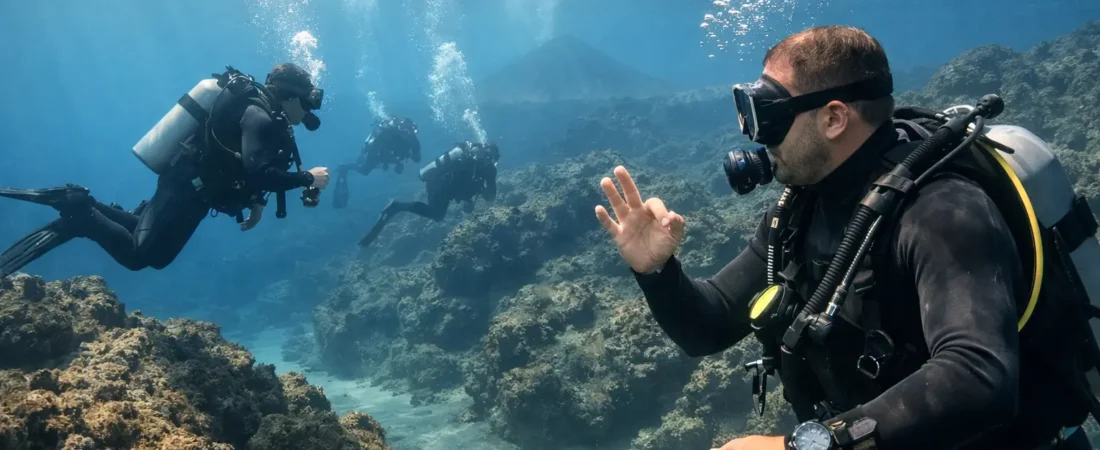
Open-water dives then bring these skills together in the sea. Tenerife’s volcanic character gives these dives a distinctive setting: dark lava formations, reefs, arches and changing textures beneath the surface. Conditions vary with weather, season and site, so the day should be organised around what is suitable and comfortable rather than following a fixed script.
How long should you allow?
An introductory experience can often fit comfortably into one holiday day. A first certification usually needs several sessions over more than one day, especially when it includes independent learning and multiple open-water dives. Allowing enough time is one of the kindest things you can do for yourself.
Trying to squeeze a course between a late arrival, a long excursion and a flight home can make an enjoyable milestone feel rushed. Build in space to rest, hydrate and absorb what you have learnt. Your instructor should also discuss sensible timing around flying after diving, as this needs to be planned carefully.
A shorter option may suit an experienced snorkeller who is already comfortable in the sea, while someone feeling nervous may prefer a more spacious schedule. Neither approach is better. Comfort and understanding are more valuable than finishing quickly.
Safety questions worth asking before you book
A reassuring diving course begins with open communication. Before booking, explain honestly whether you are a complete beginner, when you last dived, and whether anything makes you apprehensive. A professional instructor will welcome the conversation and help you decide what is appropriate.
You should expect clear information about the instructor’s certification, what is included, the likely schedule and any medical questionnaire required before diving. Some medical conditions, medication, recent illness or pregnancy can mean you need medical advice before taking part. This is not a formality to rush through. It helps protect you and ensures the instructor can plan responsibly.
It is also reasonable to ask how the experience is tailored to you. For many people, especially first-time divers, a private setting makes a genuine difference. It gives you room to pause, repeat a skill or simply take a moment to settle into the sensation of breathing underwater.
At Tenerife Scuba Diving, the focus is on private, personalised support with a certified instructor, equipment included and a smooth organisation around the experience. For guests staying near Los Cristianos, Costa Adeje or Playa de las Américas, that can make a first course feel simple to arrange rather than another holiday task to manage.
What to bring, and what not to worry about
Bring swimwear, a towel, sun protection for before and after the session, and drinking water. A warm layer can be welcome after time in the sea, even on a sunny Tenerife day. Your diving equipment should be prepared and fitted for you, so there is no need to buy specialist kit for a first course.
Do not worry if you are not an Olympic swimmer. You do need to be comfortable in water and meet the requirements of the course you choose, but confident swimming is built from calm movement and clear instruction, not speed. If you wear glasses or contact lenses, mention this when booking so suitable options can be discussed.
Photography can also be a lovely part of the memory. Underwater photos, when included in your experience, let you stay present during the dive rather than trying to manage a camera yourself.
Make your course part of a better holiday memory
The most memorable first dives are rarely about ticking off a qualification as quickly as possible. They are about the first quiet breath beneath the surface, the moment buoyancy begins to make sense, and the confidence that comes from knowing someone experienced is beside you.
Choose a course that gives those moments the time they deserve. Arrive rested, be honest about your confidence, and let your instructor adapt the experience to you. Tenerife’s underwater world will still be there when you are ready to meet it calmly.