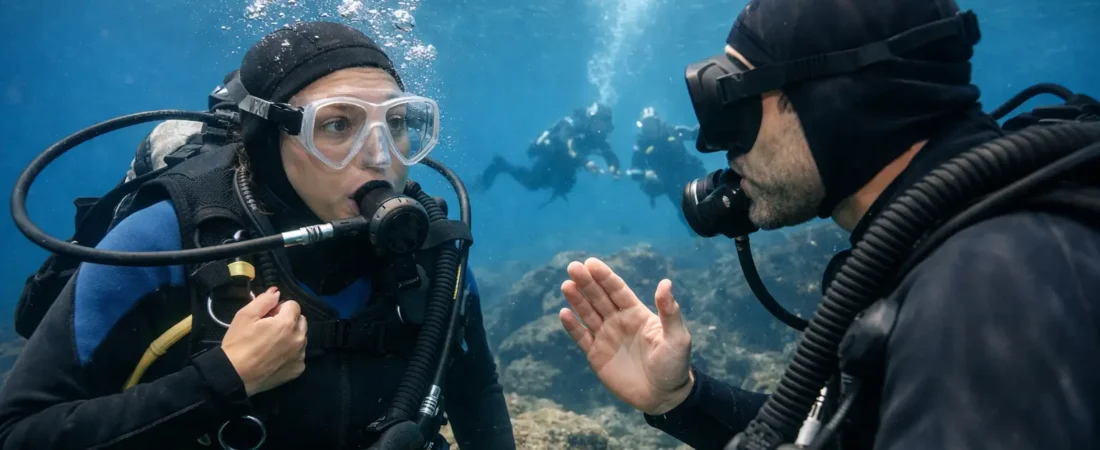
A first breath underwater can feel like a very big moment when your mind is already busy imagining everything that could go wrong. So, can anxious adults try scuba safely? For many people, yes – provided the experience is approached at the right pace, with clear guidance, suitable health screening and an instructor who treats confidence as part of safety.
Feeling anxious does not mean you are weak, difficult to teach or unsuitable for scuba diving. It simply means your first experience should have room to breathe. A calm, private introduction can turn an intimidating idea into a surprisingly gentle one.
Can anxious adults try scuba safely?
Anxiety alone does not automatically prevent someone from trying scuba. The key question is whether you can feel, communicate and respond safely in the water on the day. Scuba diving requires attention, basic comfort in the water and the ability to follow simple instructions. It should never feel like something you have to push through at all costs.
A qualified instructor will begin by discussing your experience, concerns and medical information. This is not a test to pass. It is a sensible conversation that helps shape the session around you. Perhaps you are worried about breathing through a regulator, putting your face in the water, feeling out of control, or simply not knowing what to expect. Naming the worry often makes it easier to manage.
For some people, anxiety is mild and situational: nerves before a new activity, a fear of the unfamiliar, or uncertainty about the sea. Others live with panic attacks, claustrophobia or a diagnosed mental health condition. In these cases, the answer depends on how you are currently feeling, whether your condition is well managed, and whether any medication or medical history needs professional clearance. If there is doubt, speak with a doctor familiar with diving medicine before booking.
Why a private first dive can feel different
The environment around a first dive matters as much as the underwater part. An anxious beginner benefits from knowing who will be with them, what will happen first, and that there is no pressure to keep up with anyone else.
With a private experience, the instructor can take time over each stage: meeting you on land, fitting equipment carefully, explaining the plan in plain language and practising the key skills in shallow water. You can ask the same question twice. You can pause. You can take a few extra minutes before putting your face in the water.
That pace is not an indulgence. It supports good decision-making. When people feel rushed, they tend to tense their shoulders, breathe too quickly and focus on imagined problems rather than the instructor’s calm cues. A personalised approach gives your body time to recognise that breathing underwater is possible and controlled.
At Lov’Ocean, a private introduction is designed around this principle. The instructor remains close, equipment is included and the session develops step by step. Photos are also included, but they are a lovely record of the experience rather than a reason to hurry it.
What happens before you go underwater
Much of the reassurance should happen before the dive itself. A well-organised first experience begins with an honest check-in, not a leap into the unknown.
Your instructor will explain how the regulator works, how to clear a little water from your mask and what the basic hand signals mean. You do not need to memorise a long technical lesson. You need to understand a small number of practical actions and know that help is immediately beside you.
The first breaths are normally taken where you can stand or remain very close to the surface. This is where many anxious guests have their most important realisation: the breathing feels different, but it is steady. You breathe slowly in and slowly out, and the equipment delivers air when you inhale.
There is no prize for continuing if those first moments do not feel right. A responsible instructor will assess your comfort, repeat a skill, adjust the plan or stop the session if necessary. Choosing not to continue is not failure. It is good judgement, and it keeps scuba diving exactly what it should be: an enjoyable, voluntary experience.
Small ways to make your first scuba experience calmer
You do not need to arrive fearless. A few practical choices can make a meaningful difference.
Tell your instructor what triggers your anxiety
Be specific if you can. Perhaps unexpected splashing unsettles you, tight masks make you nervous, or you need verbal reassurance before entering the water. This information allows the instructor to anticipate rather than react. It also removes the effort of trying to appear more comfortable than you are.
Keep the day simple
Choose a time when you are rested, hydrated and not rushing from another activity. Avoid treating a first dive as one item in an overfilled holiday schedule. Leave enough time to arrive calmly, listen to the briefing and settle into the experience.
Alcohol, recreational drugs and diving do not mix. If you are tired after a late night, unwell, congested or emotionally overwhelmed, it may be wiser to postpone. The sea will still be there on another day.
Practise slow, ordinary breathing
You do not need specialised breathwork. Before entering the water, try a gentle rhythm: breathe in comfortably, then let the exhale leave slowly. The aim is not to force relaxation but to avoid short, hurried breaths. Underwater, focus on one calm breath at a time rather than thinking several minutes ahead.
Give yourself permission to change your mind
This is perhaps the most reassuring agreement to make before you start. You can pause at the shore. You can stop during shallow-water practice. You can decide that snorkelling feels like enough for the day. Knowing you retain choice often reduces the sense of being trapped.
When scuba may not be the right choice that day
There are circumstances where caution should come before ambition. If anxiety is causing frequent or unpredictable panic attacks, if you are experiencing a severe low mood, or if you have recently changed medication, seek appropriate medical advice before considering scuba.
The same applies if you have a heart, lung, ear or sinus condition, are pregnant, have recently been ill, or answer yes to any question on the diving medical form. A doctor may simply confirm that you are fit to dive, ask for a little more information, or advise against it. That guidance is there to protect you, not to take an experience away from you.
It is also worth being realistic about water confidence. You do not need to be an advanced swimmer to enjoy an introductory dive, but you should be willing to be in the sea and able to listen, practise and communicate with your instructor. If even standing in shallow seawater feels unbearable, starting with time by the water or a snorkelling session may be a kinder first step.
Tenerife conditions and comfort in the water
Tenerife can be a particularly appealing place for a first scuba experience because the water is often clear, the climate is pleasant and the volcanic coastline offers a striking underwater setting. Yet conditions still vary with the weather, swell and site. The best plan is not the deepest or most ambitious one. It is the one that feels calm, suitable and well supervised on the day.
For guests staying around Los Cristianos, Costa Adeje or Playa de las Américas, a thoughtfully organised experience can remove several sources of holiday stress. Knowing what is included, where to meet and what to bring leaves more mental space for the part that matters: becoming comfortable in the water.
The goal is comfort, not bravery
A good first dive is not measured by depth, duration or whether you looked completely relaxed in the photographs. It is measured by whether you felt listened to, remained within your comfort zone and experienced the quiet surprise of being able to breathe beneath the surface.
If scuba has been on your mind for years but anxiety keeps moving it to ‘someday’, choose an instructor-led experience where your pace is respected from the first conversation. Sometimes the most memorable step is not going further. It is discovering that you can take the first calm breath.