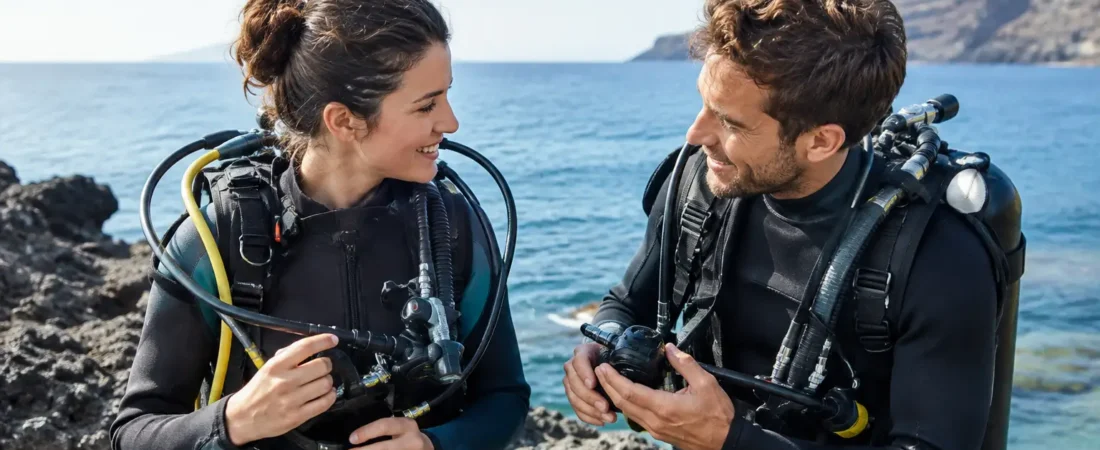
A low price and a sunny photo do not tell you what your first breath underwater will feel like. The best questions to ask before booking scuba help you find an experience that feels calm, well organised and suited to your confidence level – especially if this is your first time diving in Tenerife.
For some travellers, a busy boat with a large group is part of the fun. For others, particularly beginners, a quieter private experience with a dedicated instructor makes all the difference. Asking a few clear questions before you reserve lets you compare operators fairly and arrive knowing what to expect.
Best questions to ask before booking scuba in Tenerife
Is this experience suitable for a complete beginner?
Not every dive advertised to visitors is designed in the same way. Ask whether the activity is a genuine beginner try dive, whether you need previous experience, and how the session is introduced before entering the water.
A reassuring beginner scuba diving experience should begin with a simple explanation of the equipment, breathing and hand signals. You should have time in shallow water to get comfortable before moving on. A good instructor will never rush the first few minutes just to keep to a timetable.
If you are nervous about water, say so when you enquire. Feeling slightly apprehensive is very common, even for confident swimmers. The right format is usually one that adapts to you rather than expecting you to keep up with a large group.
Will I have my own instructor or be part of a group?
This question changes the whole experience. Private scuba diving in Tenerife generally means more individual attention, a pace based on your comfort and more time to ask questions. It can be particularly valuable for couples where one person feels confident and the other needs more reassurance.
Ask for a clear explanation of the instructor-to-diver ratio, rather than assuming that the word small group means private. A group may still include several people at different confidence levels. There is nothing inherently wrong with group diving, but it suits travellers who are happy with a shared pace and less individual guidance.
For a private try dive in South Tenerife, ask whether the instructor remains with you throughout the water session and whether the experience is reserved solely for your party. That clarity avoids disappointment on the day.
Where will we dive, and why is that site chosen?
South Tenerife has shore dives and boat-access sites, each offering a different feel. A shore entry can be an excellent option for first-time divers because it allows a gradual start and often avoids the extra movement and timing involved with a boat. Certified divers may prefer a guided dive selected for their qualification, recent experience and the conditions that day.
Ask whether the planned site is fixed or selected according to weather, swell and visibility. Flexibility is a positive sign. The sea can look inviting from the beach while conditions below the surface or at the entry point are less suitable for a relaxed dive.
It is also reasonable to ask about the practical side: how far the site is from Los Cristianos, Playa de las Américas or Costa Adeje, whether transport is included, and how much walking is involved. This matters if you are travelling with children, have limited mobility or simply want to plan the rest of your holiday.
What happens if conditions are not suitable?
No responsible diving operator can promise perfect visibility, flat water or a particular animal sighting. Tenerife can offer enjoyable diving year-round, but daily conditions still vary. Ask what happens if the weather changes, the sea state is uncomfortable or the instructor considers the site unsuitable for your level.
A professional answer should explain whether an alternative site, a different time or a rescheduled date may be possible. It should also make clear that safety decisions remain with the qualified instructor. This is not a drawback – it is exactly the judgement you want from the person taking you underwater.
If diving is one of the highlights of your trip, consider booking it earlier in your stay. That gives you more flexibility should the conditions require a change.
What equipment is included, and how is it fitted?
For a try dive Tenerife visitors should normally expect the essential scuba equipment to be provided. Confirm what is included in the quoted price, including wetsuit, mask, fins, regulator, buoyancy equipment, weights and air. Ask whether there are any extras for transport, insurance, photographs or entry fees.
Fit is not a minor detail. A mask that leaks, fins that rub or a wetsuit that feels wrong can distract from an otherwise lovely first dive. Let the instructor know your shoe size, height and general build in advance if requested, and mention if you need prescription lenses or have a particular concern about being cold.
Equipment does not need to look brand new to be safe, but it should be well maintained, clean and checked before use. You can ask how equipment is prepared and whether you will be shown how each item works in plain language.
How much time will I actually spend in the water?
A two-hour experience does not mean two hours underwater. It may include introductions, equipment fitting, a safety briefing, travel and time to get comfortable in shallow water. Ask how the total duration is structured and what underwater time is realistic for a beginner.
The answer depends on air consumption, comfort, conditions and the type of dive. First-time divers often find that a shorter, unhurried underwater experience is far more enjoyable than trying to make it last as long as possible. Quality of attention matters more than a headline number.
Certified divers should ask about the planned depth range, expected duration and whether the guide adjusts the route to qualifications and recent diving history. Be honest if you have not dived for a while. A refresher or an easier first dive may be the most enjoyable choice.
What safety checks and medical questions are part of the process?
You should expect clear questions about your health, swimming confidence and any relevant medical conditions. Certain conditions, medications, recent surgery, pregnancy or respiratory and ear issues may need further advice before scuba diving. If you are unsure, ask before booking rather than hoping it will not matter on the day.
A responsible operator will explain the basic safety procedures, check that you can equalise comfortably and make sure you understand how to communicate underwater. Beginners should not feel embarrassed by any question, whether it is about clearing a mask, breathing from a regulator or what happens if they want to stop.
Also ask about flying after diving if it affects your travel plans. Your instructor can advise based on the dive profile and your schedule. Avoid leaving a dive until the last possible moment before a flight.
Can we communicate comfortably with the instructor?
Clear communication is a safety feature as well as a comfort feature. If English is not your strongest language, ask which languages the instructor speaks and whether the briefing can be given in a language you understand well. French-speaking scuba diving visitors in Tenerife may prefer to arrange this in advance rather than relying on a last-minute translation.
You should feel able to say that you are anxious, cold, tired or not ready to continue. The best instructors listen without making you feel that you are holding anyone up.
Are photos included, and will they change the focus of the dive?
Underwater photos are a lovely reminder of a first scuba experience, particularly for a couple or family. Ask whether photos are included, how they will be shared and whether the instructor takes them only when you are settled and comfortable.
Photos should never turn a beginner session into a performance. Your first priority is breathing easily, moving slowly and enjoying the moment. Once that feels natural, a few photographs can capture it without taking attention away from safety.
Choosing the experience that feels right
The cheapest option is not always poor, and the most expensive option is not automatically more personal. What matters is whether the operator answers your questions directly, explains what is included and shows a genuine interest in your comfort.
When comparing scuba diving in Los Cristianos or elsewhere in South Tenerife, look beyond the sales description. Consider the group size, the level of guidance, the site choice, the realistic timetable and how confidently you can communicate with the instructor. Those details usually shape the memory more than the price difference.
If you want a private, relaxed experience, share your dates, diving background and any concerns before committing. A good instructor can help you choose between a first try dive and a guided certified dive, then plan a session that leaves you with the right kind of excitement: the feeling that you would happily do it again.