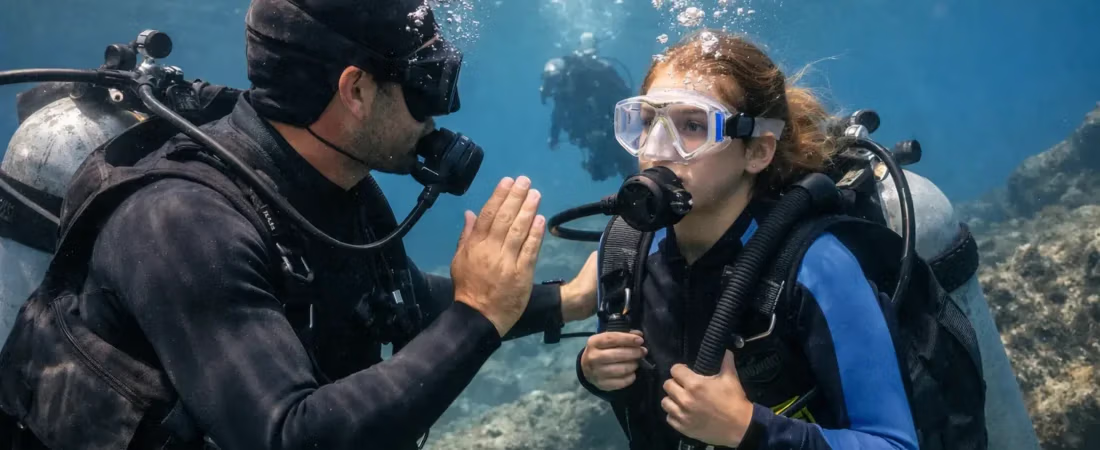
You do not need to be a strong swimmer to enjoy your first scuba experience. In fact, one of the most common questions we hear is: can non swimmers try scuba? For many beginners, the worry is not the sea itself, but the feeling of not being fully in control. That is exactly why the right setting matters so much.
Scuba is very different from swimming. You are not expected to move through the water with confident strokes as you would in a pool. You wear buoyancy equipment, a mask, fins, and a tank, and you stay with a qualified instructor who manages the pace, the depth and the overall experience. For many adults, especially those who feel unsure in the water, that changes everything.
Can non swimmers try scuba in real life?
Yes, in many cases they can. A complete beginner who cannot swim well, or at all, may still be able to do a supervised introductory dive. The key point is supervision. This is not a situation where you are left to work things out on your own. A proper introduction is designed to be calm, closely guided and adapted to your comfort level.
That said, there is an important nuance. Not swimming does not automatically make scuba unsafe, but it can make some people more anxious at the start. If a person is deeply uncomfortable putting their face in water, struggles to breathe calmly through a mask, or panics easily, then the session may need a slower approach. Sometimes a gentle try in shallow water is enough. Sometimes it is better to wait and build confidence first.
A good instructor will not force the experience. They will assess how relaxed you feel, explain each step clearly, and keep the session within limits that feel manageable.
Why scuba can feel easier than swimming
The question can non swimmers try scuba often comes from a simple assumption: if you cannot swim, surely you cannot dive. But the body position and the experience are very different.
On a first scuba session, you are usually in controlled conditions. You begin slowly, often in shallow water, and learn how to breathe through the regulator before doing anything else. Breathing is the real foundation. Once that feels steady, many people realise they are not fighting the water at all. They are floating with support, moving gently, and following the instructor rather than relying on swimming ability.
This is also why rushed experiences are not ideal for nervous beginners. Confidence under water comes from feeling looked after, not from being pushed through a checklist.
What matters more than swimming ability
For a first-time diver, especially a non-swimmer, comfort and mindset matter more than technique. If you can listen, breathe slowly, and follow simple instructions, you already have the essentials for a safe introduction.
Your instructor will usually look for a few things. Can you stay calm while wearing the mask? Can you breathe naturally through your mouth? Can you communicate if something feels wrong? These are far more relevant on an introductory dive than whether you can swim a long distance.
Physical condition matters too, but not in an athletic sense. You do not need to be especially sporty. You simply need to be generally well enough for light activity in the sea, with no medical issue that would make diving unsuitable.
What a non-swimmer can expect on a first scuba session
The best first experiences are reassuring from the start. You are welcomed, briefed clearly, fitted with equipment, and given time to ask questions before going anywhere near depth. Nothing should feel hurried.
Once in the water, the first goal is comfort. You practise breathing and get used to the sensation of being supported by the equipment. Your instructor stays close and monitors how you feel at every stage. If you need a pause, you pause. If you only feel ready for a very gentle introduction, that is still a valid experience.
For many guests, that individual rhythm is what makes the difference between fear and enjoyment. A person who says, « I cannot swim, I do not think I can do this, » often changes their mind once they realise they are not expected to perform. They are there to experience, not to impress.
When the answer is yes, but with conditions
So, can non swimmers try scuba? Yes, but not every non-swimmer will have the same experience.
Someone who is calm in water but simply never learned to swim may do very well. Someone who becomes tense the moment they cannot touch the bottom may need much more reassurance. Someone with a strong fear of water may be better starting with a very shallow familiarisation session first.
This is where private guidance becomes especially valuable. A personalised session allows the instructor to adapt to your pace, focus on your breathing, and keep the experience simple. That is often the most comfortable option for adults who want to try scuba but feel embarrassed about their lack of swimming ability.
How to know if you are a good candidate
If you are asking the question because you are curious, that is already a positive sign. Curiosity usually means you want the experience, even if you feel nervous.
You are likely a good candidate for an introductory dive if you feel able to enter calm water with support, listen carefully to instructions, and tell your instructor honestly how you feel. You do not need to be fearless. You do need to be open and communicative.
If you are unsure, say so before booking. A professional dive team will explain what is realistic and what is not. They should never promise that everyone will love it, and they should never make you feel silly for being anxious. Honest advice is part of good care.
A few things that help non-swimmers feel comfortable
The environment matters. Calm sea conditions, an unhurried briefing, well-fitted equipment and a patient instructor all reduce stress quickly. The opposite is also true. If you feel rushed, confused or overlooked, even a confident swimmer can feel uneasy.
It also helps to arrive with the right expectation. Your first dive is not about going deep or doing anything dramatic. It is about discovering whether breathing under water feels natural to you. For many people, that first calm moment is the one they remember most.
In Tenerife, warm water for much of the year and accessible entry points can make first experiences more comfortable for beginners. For guests staying around the south of the island, a carefully organised session can feel surprisingly easy from start to finish.
Can non swimmers try scuba and then progress further?
Sometimes yes, but it depends on the training path. A one-off introductory dive is not the same as a full certification course. Introductory experiences can often be adapted for non-swimmers more easily because they involve close supervision and limited scope.
For a full scuba qualification, swimming requirements are usually part of the course standards. So if your goal is to become a certified diver, you may eventually need to work on basic swim skills. That should not discourage you from trying a first experience now. Many people begin with a simple discovery dive and decide later whether they want to go further.
There is no need to decide everything on day one. Your first step can simply be to see how you feel in the water with professional support.
The value of choosing a reassuring setup
When someone is nervous about not being able to swim, trust becomes the deciding factor. You want a setting where questions are welcome, where safety is explained clearly, and where the experience adapts to you rather than the other way round.
This is especially true for couples, families or solo travellers on holiday who want something memorable without stress. A premium, personalised approach is not about making scuba feel exclusive. It is about making it feel calm, clear and properly supported. Lov’Ocean has built much of its diving experience around exactly that kind of attention.
If you have been watching others enjoy the sea from the shore and wondering whether it is possible for you too, the answer may be more encouraging than you expect. Not being a swimmer does not automatically close the door on scuba. With the right instructor, the right pace and the right conditions, it can be the beginning of a very beautiful first experience.