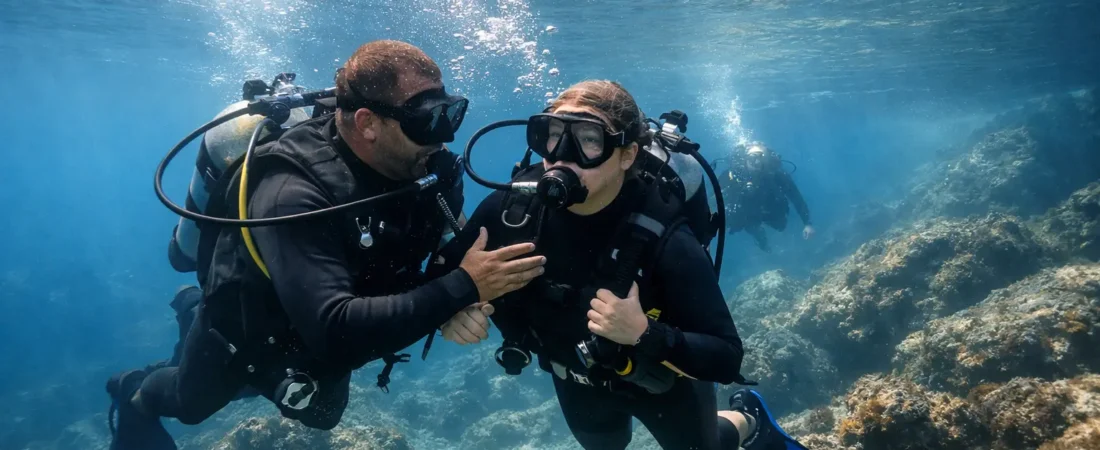
The first few moments beneath the surface are often quieter than people expect. Your breathing becomes the main sound, sunlight moves across volcanic rock, and a new world begins only a short distance from the coast. For anyone searching for scuba diving Tenerife beginners information, the key is not bravery or technical knowledge. It is having time, clear guidance and an instructor who keeps the experience calm from the first conversation to the final photo.
A first dive in Tenerife can be a wonderful part of a holiday, especially when it is organised around your comfort. You do not need to arrive with equipment, previous training or a perfect level of confidence. You simply need to be reasonably comfortable in the water, in good general health, and ready to follow the instructor’s guidance.
Why Tenerife suits a first scuba experience
Tenerife offers conditions that make learning to breathe underwater feel less daunting. The water is often pleasantly mild, visibility can be excellent, and the island’s volcanic coastline creates sheltered areas with clear, interesting underwater scenery. Rather than needing to travel far offshore, many suitable first-dive locations are close to the south of the island.
The seabed here has character. Dark volcanic formations, rocky ledges and shoals of small fish create a setting that feels memorable without requiring a demanding dive. Marine life is always nature-led and cannot be promised, but there is usually plenty to notice once you slow down and look around.
For visitors staying around Los Cristianos, Costa Adeje or Playa de las Américas, a well-organised experience also keeps the day straightforward. Equipment can be prepared for you, the briefing is kept clear, and any practical arrangements can be confirmed before the day so there are no unnecessary surprises.
Scuba diving in Tenerife for beginners: what happens
A beginner session is often called a discovery dive or introductory dive. It is an experience led directly by a certified instructor, rather than a full diving qualification. You will receive a simple explanation of the equipment, how to communicate underwater and the few skills needed to feel safe and relaxed.
There is no need to memorise pages of theory. Your instructor will explain one point at a time: how the mask works, how to breathe from the regulator, how to clear a little water from your mask, and how to signal if you want to pause. You practise these steps in shallow water before moving on. This measured start is what helps many first-timers realise that scuba diving can feel surprisingly natural.
Once you are comfortable, the underwater part begins at a gentle depth suited to beginners and the conditions of the day. The instructor remains close throughout, monitoring how you feel and adjusting the pace when needed. There is no prize for going deeper or staying longer. A relaxed, enjoyable first experience matters far more.
Your pace is part of the experience
Some people breathe easily from their first minute underwater. Others need a little longer to settle, especially if the sensation is completely new. Both responses are normal. A quality first dive allows space for questions, extra practice and quiet reassurance.
That is why a private format can make such a difference. It gives the instructor the freedom to focus entirely on you, whether you would like more time in shallow water, a slower descent, or a few moments at the surface before trying again. The experience should feel personal, not rushed.
Do you need to be a strong swimmer?
You do not need to be an athlete, nor do you need previous scuba experience. Being able to swim and feeling reasonably at ease in the sea are helpful, but scuba diving is not about swimming quickly. The equipment supports you at the surface, while underwater you move slowly and use fins with gentle, efficient movements.
Before confirming a dive, you will be asked about your health and any medical considerations. Certain conditions, recent surgery, pregnancy, respiratory concerns or ear problems may mean that diving is not suitable without medical advice. This is not a formality. Honest answers help the instructor make the right decision for your safety.
If you have not been in the sea for years, feel nervous about deep water, or are unsure whether diving is right for you, say so when booking. A thoughtful instructor can explain what the session involves and help you decide without pressure. Sometimes the best first step is simply having the right information.
What to bring for your first dive
Most of the specialist equipment is provided: wetsuit, mask, fins, tank, regulator and buoyancy equipment. This means you can travel light and avoid the stress of buying gear before you know whether scuba diving will become a hobby.
Bring swimwear, a towel, sunscreen for before and after the dive, and drinking water. A warm layer can be welcome afterwards, particularly outside the hottest part of the day. Avoid alcohol before diving, arrive well rested where possible, and do not plan to fly shortly after your session. The instructor will confirm the appropriate no-fly guidance for your dive profile.
If you wear glasses, do mention it in advance. Contact lenses are usually manageable for diving, while prescription masks may be an option in some situations. Small practical details are best discussed beforehand, so your attention can stay on enjoying the water.
The safety details that should reassure you
Good scuba diving feels relaxed because the preparation is serious. Your instructor checks the equipment, explains each safety point in plain language and chooses a site that fits the weather, sea state and your level of comfort. If conditions are not appropriate, changing the plan is a sign of sound judgement, not inconvenience.
Underwater, communication is simple and visual. You will learn signals for ‘OK’, ‘stop’, ‘go up’ and ‘I am not comfortable’. You are never expected to push through anxiety. If something does not feel right, you signal, pause and resolve it with your instructor.
It also helps to know that equalising the pressure in your ears is done gradually during the descent. Most people manage this easily with calm instruction, but it should never be forced. If your ears do not clear comfortably, the correct response is to stop or ascend slightly, not to continue down.
Making the most of the day
Try not to judge your first dive by how deep you go or how many species you recognise. The real achievement is becoming comfortable enough to look around, notice the light and enjoy the unusual calm of being underwater. Even a short first dive can stay with you long after your holiday ends.
Photos are especially valuable because your hands and attention are occupied during the experience. With underwater photos included, you can keep a record of that first descent without needing to manage a camera yourself. They also make it easier to share the moment with family and friends who stayed on land.
For couples, friends or families travelling together, it is worth discussing what each person hopes for. One person may be excited while another is cautious. A personalised plan respects both reactions and creates a better memory for everyone.
From first dive to a certified course
A discovery dive is ideal if you want to experience scuba before committing to lessons. It is not a certification, but it can be the clearest way to find out whether you enjoy the feeling of breathing underwater and moving through the sea.
If you leave wanting more, a beginner course is the next step. Certification training develops the skills and knowledge needed to dive more independently with a qualified buddy, within the limits of your training. It requires more time than an introductory session, but it offers a lasting new way to experience the sea on future holidays.
There is no need to decide before you get wet. Many guests book a first experience simply because they are curious. After a calm, carefully guided dive, the next choice often feels much easier.
A first scuba dive should feel like a well-looked-after adventure: unhurried, clearly explained and shaped around your confidence. When you are ready, Tenerife’s volcanic coast is waiting just below the surface.